50 Matches Found

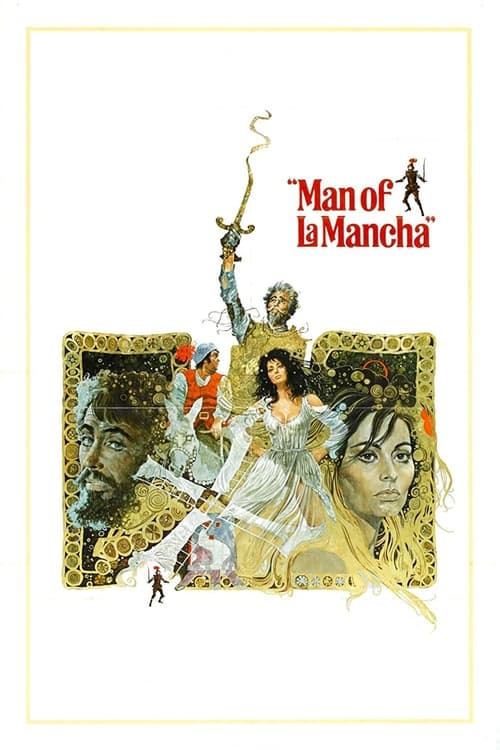
Man of La Mancha

In the 16th century, poet, playwright and part-time actor Miguel de Cervantes has been arrested, together with his manservant, by the Spanish Inquisition. They're accused of presenting an entertainment offensive to the Inquisition. Inside the huge dungeon into which they have been cast, the other inmates gang up on Cervantes and his manservant, staging a mock trial, with the intention of stealing or burning his possessions. Cervantes wishes to desperately save a manuscript he carries with him and stages, with costumes, makeup, and the participation of the other prisoners, an unusual defense—the story of Don Quixote.

Man of La Mancha

6.5 1972
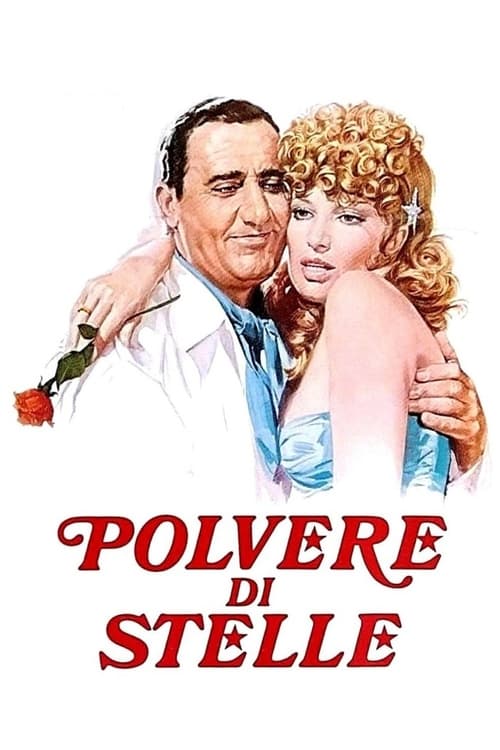
House of Pleasure for Women

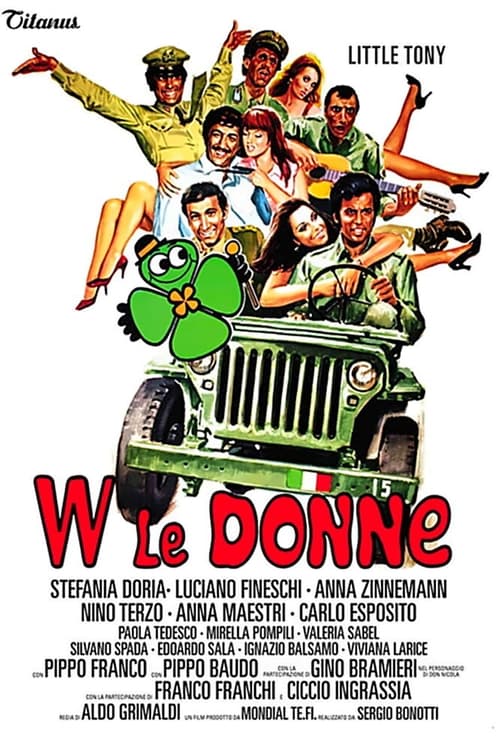
The United States of America, after the great success of Vietnam, Watergate and so on, have decided to expand their activities in Italy. Mr. Chips has chosen Eddie Mordace to open the Italian branch of the multinational American Love Company. So Eddie opens in Milan a small branch of the Company whose purpose is to comfort women. Eddie hires Simbad, Adone and later, when business starts to go well, Ugolino, a real Count, and Ivanoe, a raper, who becames the attraction of the House.

House of Pleasure for Women

5.5 1976
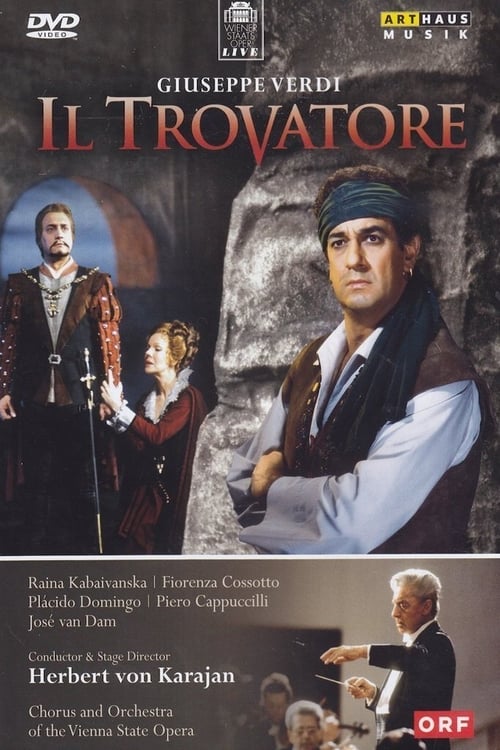
Il Trovatore - Verdi

The gypsy Azucena (Fiorenza Cossotto) takes revenge for her mother who was accused of putting a curse on one of the old Count di Luna's two sons: she decides to abduct the younger child and throw it in the flames. But when she is about to carry out this fatal act, the gypsy sacrifices her own child and keeps the old Count’s son, whom she names Manrico (IL TROVATORE, Plácido Domingo). Later, as adults, the troubadour Manrico and the Count di Luna’s elder son (Piero Cappucilli) do not know each other, but become rivals for the beautiful Leonora (Raina Kabaivanska). Manrico succeeds in winning the young woman’s heart, and she sacrifices herself for him, deceiving the Count’s son. Mad with jealousy, the latter orders the execution of the troubadour in front of his mother. Azucena reveals to him that Manrico was his brother. This legendary performance of Giuseppe Verdi's most successful opera was recorded at the Vienna State Opera under the baton of Herbert von Karajan.

Il Trovatore - Verdi

5.8 1978
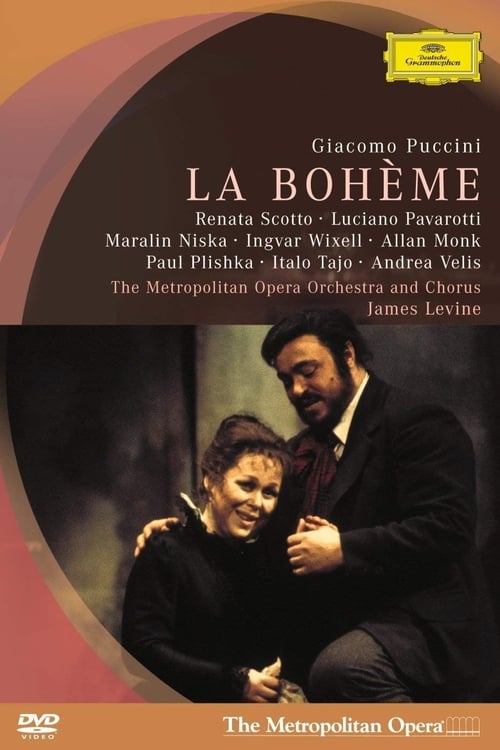
La Bohème

Puccini’s heartbreaking story of young love in the garrets of Belle Epoque Paris has attracted many famous singers through the years. But with James Levine at the helm and the starry duo of Luciano Pavarotti and Renata Scotto as Rodolfo and Mimi, every bit of emotion in the score pours across the footlights and seduces the audience. In this case, the audience was in the millions since this was the very first in the “Live from the Met” series of telecasts. The evocative production is by Fabrizio Melano, designed by Pier Luigi Pizzi.

La Bohème

10.0 1977
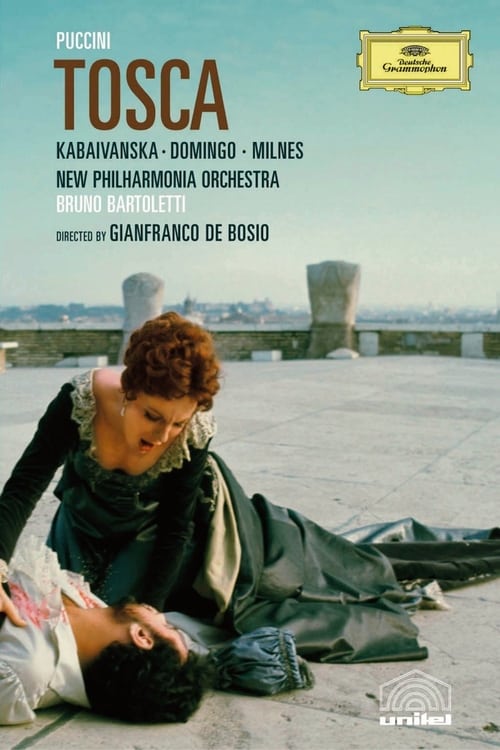
Tosca

Opera is an inherently theatrical medium that does not lend itself readily to the realism of film treatment. The shining exception is Puccini's Tosca, an action-packed melodrama that unfolds in three taut and gripping acts like the meatiest of Hollywood films noir. And unlike most operas, these three acts are set in three very specific Roman locales. Thus this 1976 film takes place in the church of Sant'Andrea della Valle (Act 1), the Palazzo Farnese (Act 2), and the Castel Sant'Angelo (Act 3).

Tosca

8.0 1976
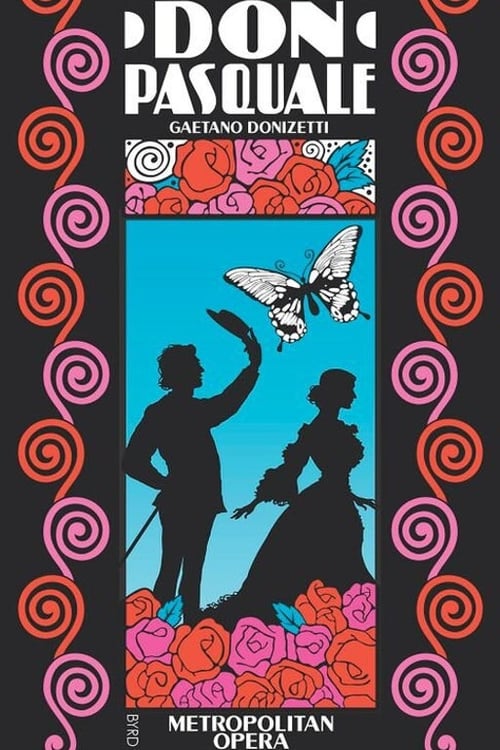
Don Pasquale

This John Dexter production, designed by Desmond Heeley, was a parting gift to the great American soprano Beverly Sills, who bid farewell to the Met as Norina, the smart young widow at the center of Donizetti’s comedy. The sensational Alfredo Kraus sings her beloved Ernesto. Håkan Hagegård, in his Met debut role and season, is Dr. Malatesta, the man who helps the young couple trick the crusty old bachelor of the title (Gabriel Bacquier at his comical best) into a fake marriage. This being a Donizetti comedy, it all turns out perfectly well at the end—and getting there is pure operatic fun.

Don Pasquale

0.0 1979
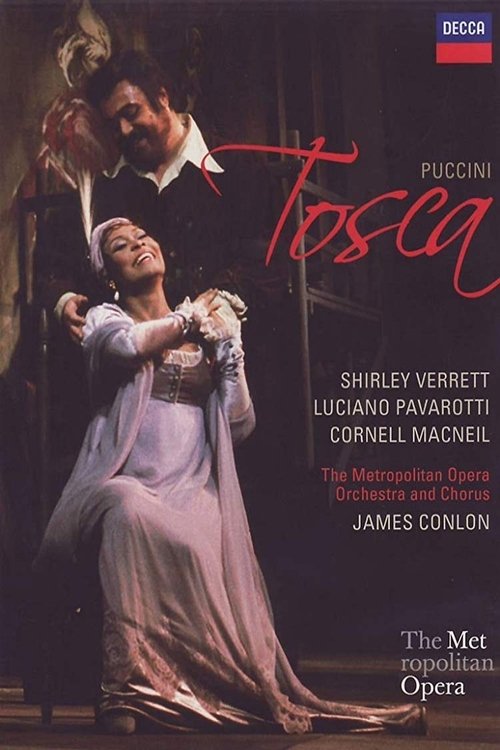
Tosca

A stellar cast brings Puccini’s spellbinding opera to life, seizing every opportunity to thrill the audience. Luciano Pavarotti is Cavaradossi, the painter and political revolutionary in love with the beautiful and famous singer Tosca (the riveting Shirley Verrett). Rome’s diabolical chief of police, Baron Scarpia (Cornell MacNeil), wants Tosca for himself—but he underestimates the fury of a woman in love. With torture, murder, and a suicide in its final moments, Tosca packs more dramatic punches than most other operas—and this classic telecast captures them all. James Conlon conducts in a production by the incomparable Tito Gobbi, one of the great Scarpias of the 20th century.

Tosca

0.0 1978
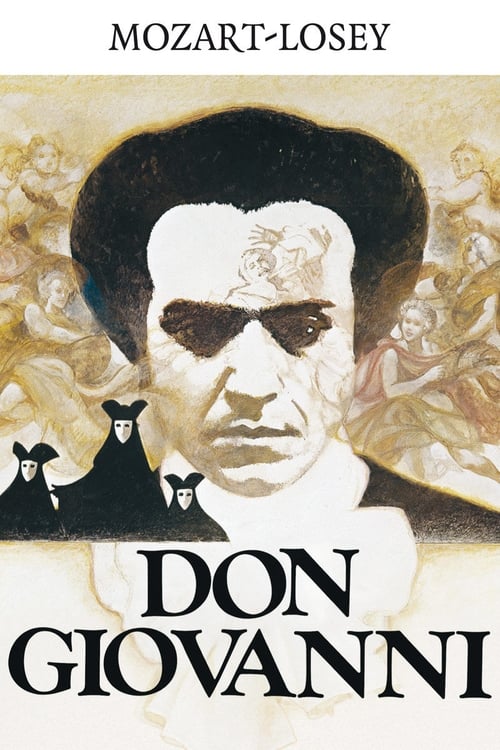
The Metropolitan Opera: Don Giovanni

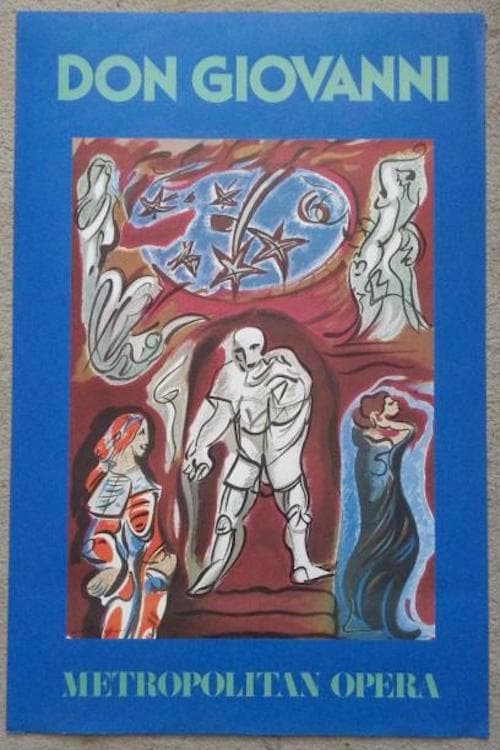
Imbuing the familiar Don Juan myth with a captivating combination of comedy, seductiveness, danger, and damnation, Mozart created an enduring masterpiece that has been a cornerstone of the repertory since its 1787 premiere. An early entry in the Met’s series of PBS telecasts, this 1978 performance captures a young James Morris in a smooth portrayal of the title role, with the legendary Joan Sutherland showing off her unsurpassed technique as Donna Anna and Gabriel Bacquier as a masterful Leporello.

The Metropolitan Opera: Don Giovanni

8.0 1978