99 Matches Found

Dawn

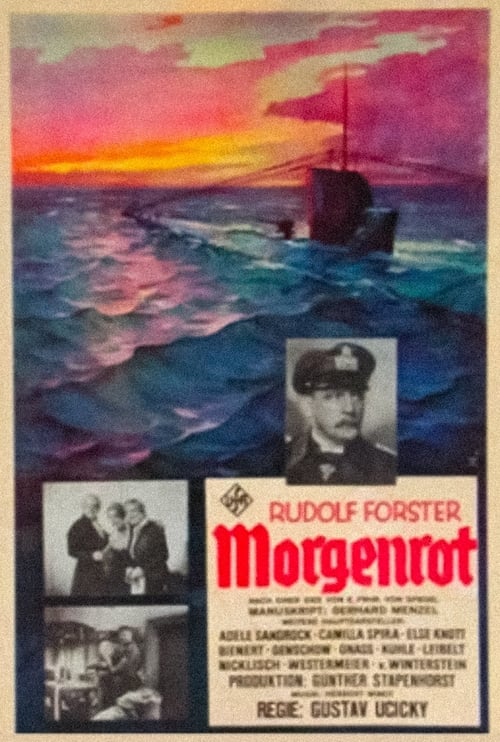
Released three days after Adolf Hitler became Reichskanzler, it was the first film to have its screening in Nazi Germany. It became a symbol of the new times touted by the Nazi regime. The title (literally "morning-red") is the German term for the reddish coloring of the east sky about a half hour before the sunrise. On patrol Captain Liers and his submarine crew sink an important British ship, but while returning to harbour, they're lured into a trap by a British vessel disguised as a neutral Danish one. They sink it after it attacks them without warning, but while they prepare to rescue survivors, a British destroyer sinks the sub. On the sea bed 60 feet down, with all but the bridge flooded, the 10 surviving crew have only 8 rescue devices. Liers orders the crew to use them, but they disobey - either all escape or nobody does.

Dawn

5.2 1933
Verspieltes Leben

Germany, 1914: The bourgeois austerity of the small, northern German town in which Ulyssa lives conflicts sharply with her desire to flirt with and be ensnared by charming, young men. That she's married is irrelevant; it's a marriage which exists only on paper. Among all the men Ulyssa flirts with, there is one for which she has genuine affection: Stefen Marbach, an upright and sincere man, far superior to her other men. And, indeed, the two are honest with one another about their feelings, but the outbreak of the First World War separates them. Sometime later, Ulyssa finds out that not only her husband, but Stefan, too, has fallen in battle. The news of this disaster leads her to reconsider and eventually give in to the constant urgings of the Viennese merchant Reindl. Ulyssa joins Reindl in Vienna and lives a life of wealth and comfort, until one day, Stefan shows up.

Verspieltes Leben

6.0 1949
Mountains on Fire

Two of Germany's best and busiest directors collaborated on Berge in Flammen (Mountain in Flames). The storyline should be of interest to pro-ecologists, inasmuch as the directors take to task the warmongers of the world for despoiling the natural beauties of the European mountain ranges with their shell-fire. The final outrage occurs during a battle between the Austrians and the Italians in the Dolomites, culminating with the destruction of an entire mountain (hence the film's title). The harrowing images on screen were complemented perfectly by the musical score of Giuseppe Beece. Also known as The Doomed Batallion, Berge in Flammen was filmed in three different languages -- German, English, French -- for a total cost of $150,000.

Mountains on Fire

6.0 1931
Comrades at Sea

1936: Fahnrich Peter serves on a torpedo boat. Peter loves Carmita, the pretty sister of a fellow seaman. But then his superior officer falls in love with her, too, who offers to marry Carmita and who accepts. Disappointed, Peter's relationship to his superior turns sour, but eventually improves after recognition of his heroic behaviour handling a fire on board his ship. Later on, his unit is sent off to fight in Spain against the Reds. In those same waters, Carmita and her father are taken prisoner by the Communists when they commandeer their cruise ship. Peter's commander receives the order not to take action against the Spanish communist pirates, but Peter and his buddies take it upon themselves to take the situation in hand. However, Peter and his buddies find themselves prisoners of the Commies, too and now his superior must decide what to do about it.

Comrades at Sea

6.5 1938
Junge Adler

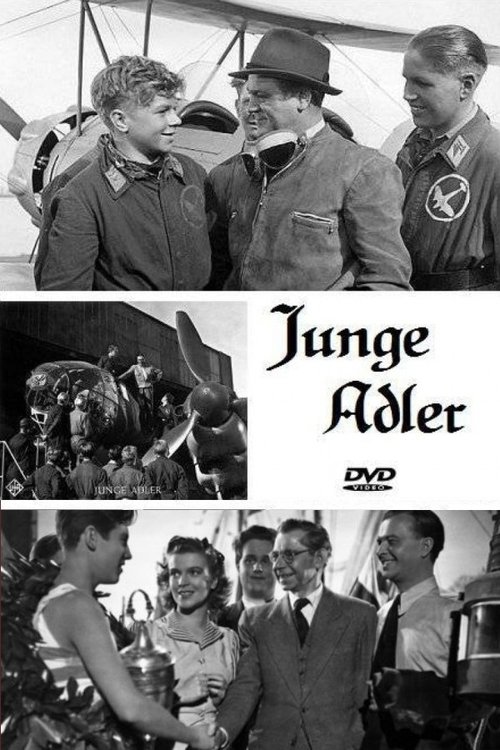
Director Brakke has good reason to be happy: he has just received the news that his son, Theo, won first place in the local boat race. To be sure, he had forbidden his son to take part in the competition, because the son's grades in school are substandard. In the end, Brakke sees no other way than to pull Theo from school and install him as an apprentice in his airplane manufacturing plant. Although Theo is received by the other 150 apprentices in a friendly fashion, he behaves in an arrogant and disrespectful tone towards them. He feels himself to be better than them, because his father is the director of the factory.

Junge Adler

5.0 1944
Waterloo

This presentation of 'Waterloo', a film by Karl Grune about the last hurrah of Napoleon, is a fascinating companion to the Abel Gance epic 'Napoleon'. 'Waterloo' presents a tale of several people involved in the final battle. Napoleon and Wellington, of course, but also the Austrian general Blutcher (who is seen as a ladies' man - his scene with a flirty Countess about halfway through the film is priceless; as are his touching scenes with his plain wife (who he imagines to be a young and nubile girl when they get romantic) and some people within his regiment. Not simply a film of war, 'Waterloo' is a story of people, of lovers, of lost opportunities.

Waterloo

4.0 1929
The Somme

The Somme (also: The Tomb of the Millions) is the title of a silent documentary drama that Heinz Paul realized in 1930 for the Cando-Film Berlin based on his own script. Paul supplemented scenes with German actors with documentary footage from archive material of German, French and English origin. - Twelve years after the end of the First World War, Heinz Paul records the battle of the Somme in 1916 with original recordings, with over one million dead, the most lossy battle of the war. The archive images are supplemented by game scenes of a German mother who loses her three sons and by trailing front scenes. The Battle of the Somme, in which Allied troops bombarded the German front line, resulted in a months-long war of position. In documentary style, the film shows scenes of the most devastating battle of the First World War. It is narrated from the perspective of a mother who loses her three sons in battle.

The Somme

0.0 1930

The Sea Calls

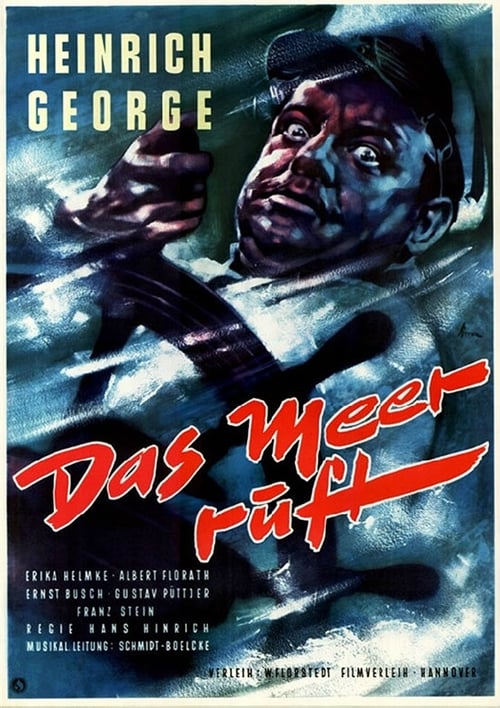
The Baltic captain Terje Wiggen works as a pilot on the island of Muhu. When the mate of the ship “Carola” calls in sick, he jumps at the chance of reviving his life as a sailor. WWI breaks soon after the departure. By and by the ship’s company gets worn down by dead calm. On account of the plague-ridden captain, Wiggen disposes of the contaminated water reserve. Discontent among the crew rises until they take the sole lifeboat and leave their mate behind. Wiggen unsuccessfully tries to bring the ship under control. At the last minute he is rescued off the Japanese coast. At his return he promises to never leave his wife and child again. But the German Imperial Navy begins to blockade the waterways of the island. Wiggen paddles to Sweden with the intention of smuggling provisions for his family. On his way back he is detained by a German captain. After five years of imprisonment he returns to Muhu once more. Wiggen is hellbent on vengeance. (Deutsche Kinemathek)

The Sea Calls

0.0 1933