Informed by the conviction that film was a means to advocate patriotism, Lai established China Sun Motion Picture Company in the early 1920s. He teamed up with friends to follow Dr Sun, traversing provinces for several years and filming precious historical moments such as Sun's inspection of the country and the Northern Expedition led by Chiang Kai-shek after the death of Sun. Some of those footage was edited into A Page of History, available to the public today, albeit deteriorated and incomplete. The Battle of Shanghai records the famous conflict at the beginning of the war in 1937 when, fervently resisting the invading Japanese army, 800 soldiers defended a warehouse until the very last moment. Shot by Lai and his team at the risk of death, the film is now an invaluable visual document in Chinese modern history.
15 Matches Found
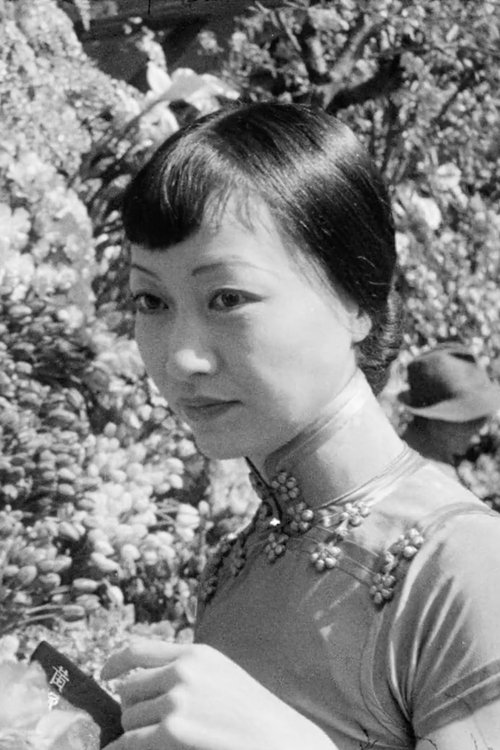
Anna May Wong created “My China Film” as her response to not being cast in Metro Goldwyn Meyer’s award-winning film about Chinese peasants, The Good Earth (1937). Immediately after that casting rejection, Wong travelled to China for the first and only time in 1936 to see the real China, the “native land” of her parents where she arranged to have her experiences there filmed by Newsreel Wong. In contrast to The Good Earth, “My China Film” is the result of a Hollywood film studio actress seizing the means of production. Her film reveals her craftsmanship as an American actress learning to play a Chinese by equipping herself to perform the role of a transnational Chinese. In addition, rather than being a straightforward documentary travelogue, “My China Film” reflects differing agendas and multiple Chinas.
My China Film
The propaganda documengtary about youth coming to Yan'an and join the communist party. The film was shot and negatives were sent to Soviet for post-production. The film studio from Soviet Union evacuated because of the Nazi-Soviet war and all negatives for this documentary were lost during this situation.
Yan’an and Eighth Route Army
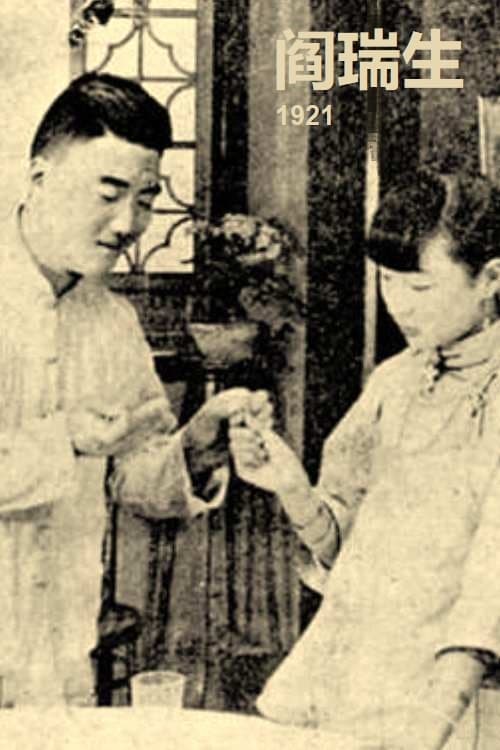
In the summer of 1920, Shanghai was scandalized by a sensational murder, a high-profile case and subsequent trial that was the ongoing topic of conversation in the city's numerous cafes, clubs and teahouses. Among the various reasons for its notoriety, two stand out: first, the victim was a high-class prostitute, well known in Shanghai; second, the murderer had been a mid-level manager in a respected foreign firm, a playboy who in Manhattan might have been termed a "prominent young man about town." There were detailed press reports daily as the case wound its way through the judicial system.
Yan Ruisheng
A documentary on the anti-Japanese war, once thought to be lost but eventually a print was discovered in the archive of Taiwan.
Long Live the Chinese Nation
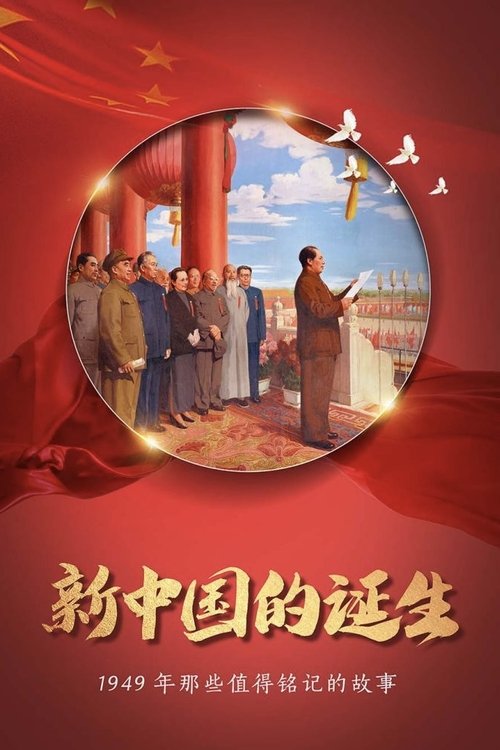
开国大典
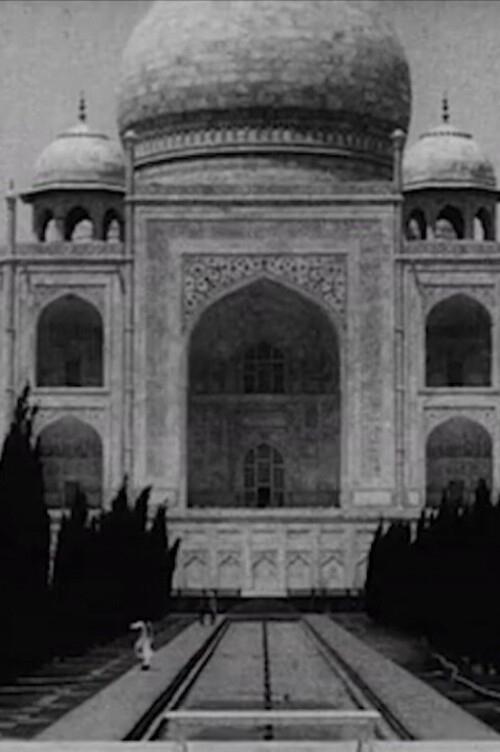
Arresting early film images of both northern India and central and south western China.
Benares Chungking Ichang
The earlist Chinese film with confirmed written record, a short film made by the government army, documenting the autumn army manoeuvres in October 1905.
Autumn Army Manoeuvres
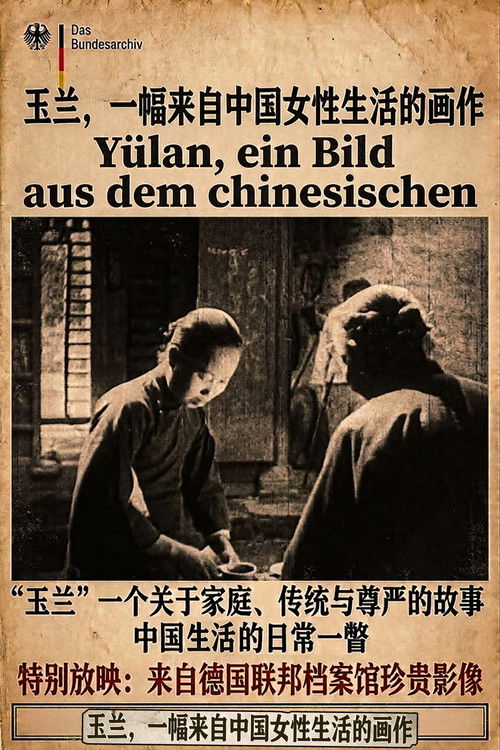
Yülan, ein Bild aus dem chinesischen
Second part of the Mare Senki (Malaya War Record) series produced by Nihon Eigasha in 1942. While the first installment documented the Japanese advance through Malaya, Birth of Syonan-to portrays Singapore under occupation after its fall in February 1942. The film shows the renaming of the city to Shōnan-tō (“Light of the South”), Japanese victory celebrations, military parades, and efforts to depict the transformation of the colony under Japanese rule. Designed as a propaganda feature, it aimed to legitimize occupation and emphasize Japan’s leadership in the Greater East Asia Co-Prosperity Sphere.
Malaya War Record: Birth of Syonan-to
This remarkable record of Kunming, regional capital of Yunnan Province, southwest China, was shot by French consul and hobbyist filmmaker Auguste François in the dying years of the Qing dynasty. The five astonishing, intimate scenes show a bustling market by the city wall, a rabble of Miao soldiers training, a wealthy couple dining, lounging opium smokers and an opera performed at a private party.
Scenes in China
From the Fox Movietone News Collection, three Chinese singers and musicians perform a song about the Ming Dynasty, then storytellers tell a story about bargaining at the market. Fox Movietone News Story 4-866.
Chinese Entertainers
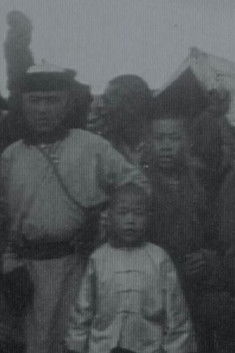
The film was made in 1935 in what is now Inner Mongolia, but which was then part of Japan's puppet state of Manchukuo or Manchuria, explaining the presence of Manchu officials sporting queues and pointed tasselled hats, both of which had disappeared by this time in the rest of republican China.
Mongolia
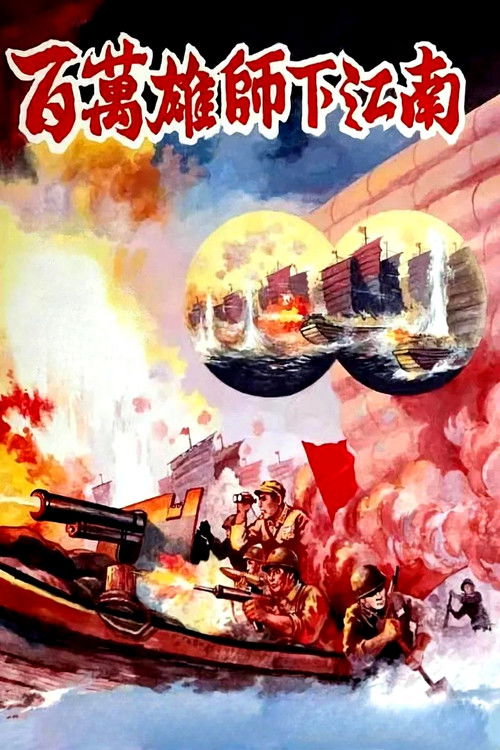
百万雄师下江南
This astonishing colour film features many of China's cultural treasures including Beijing's Forbidden City and Summer Palace, the Temple of Heaven, the Ming Tombs, the Marco Polo Bridge, the Great Wall and the palaces of Chengde as well as footage of Seoul.