39 Matches Found

Spy No. 13

During World War II, spy Wu Lai-sheung is instructed by her superior Fan Yeung-shan to murder spy number 13 Cheung Chi-ping. While Wu establishes a relationship with Sakei, the assistant general of the Japanese army, she also gets acquainted with Cheung. Cheung and Wu fall in love. Wu recommends Cheung to become Sakei's driver. Cheung pretends to court the Japanese spy Siu-kuen, but Siu-kuen arranges to kill the spies contacting with him. Cheung has seen through Kuen's identity for long. When Kuen is going to kill Wu, Cheung kills Kuen, Fan compels Wu to kill Cheung. Wu follows the instruction to murder Cheung. After the murder, Wu disappears. After the war, Fan discovers Wu ends up in asylum. When he visits Wu, he tells her of Cheung's innocence. This breaks Wu's heart. Cheung turns out to have seen through Wu's identity for a long time and pretended to have been killed to cover up his identity and facilitate his work. With the truth known and the war ended, Cheung and Wu married.
Spy No. 13

0.0 1964
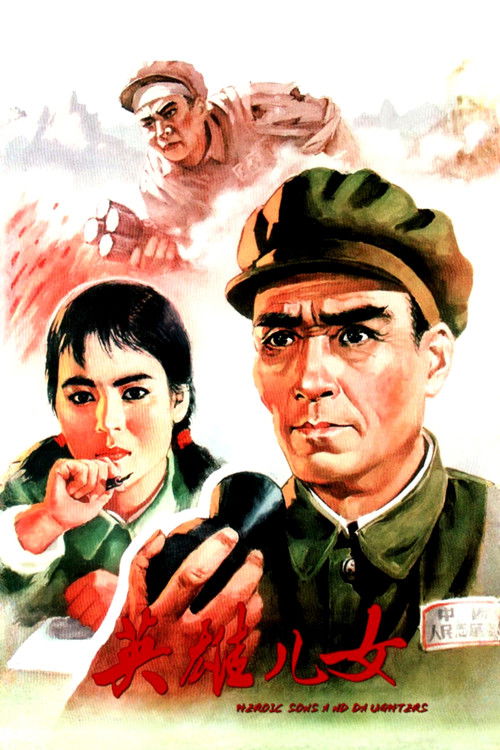
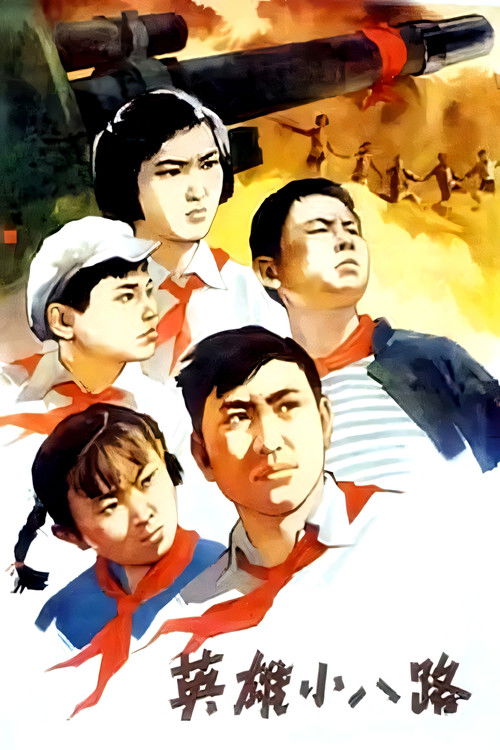
Heroic Sons and Daughters

An army officer has a chance encounter with a young soldier, the son of an old comrade in arms. The soldier tells the officer he has a sister who is also in the army. When the young soldier is killed in action, the officer visits her to pay his respects, and recognizes her as his own child, given up for adoption 18 years earlier. This presents him with a dilemma, wanting to reconnect with the only child he ever had, yet reluctant to tell her the truth about her parentage ...

Heroic Sons and Daughters

5.9 1964
Nameless Island

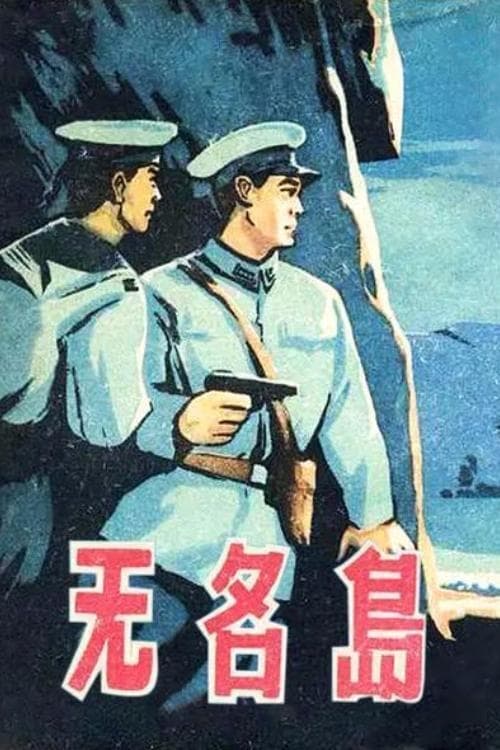
In 1958, during Chiang Kai-shek’s threats to retake the mainland, the Kuomintang navy attacked Fujian Province’s coast. The landing ship “Dacheng” was sunk by our torpedo boats, and Captain Wu John led troops to an unnamed island. Naval political instructor Wang Yongzhi and others, who fell into the water after a collision, also drifted there. They launched a political offensive against the enemy, who, unaware of our capabilities, awaited rescue. Prisoner Sun Gui swam back to his comrades, witnessed the cook’s beating, and returned to our side. Wang Yongzhi, seeing the enemy’s wait for rescue, forced them to reveal themselves. The enemy tried a fake negotiation to delay time. At night, Cai Dage brought reinforcements, eliminating the enemy on the island and their rescue ship.

Nameless Island

0.0 1960
Along The Jinsha River

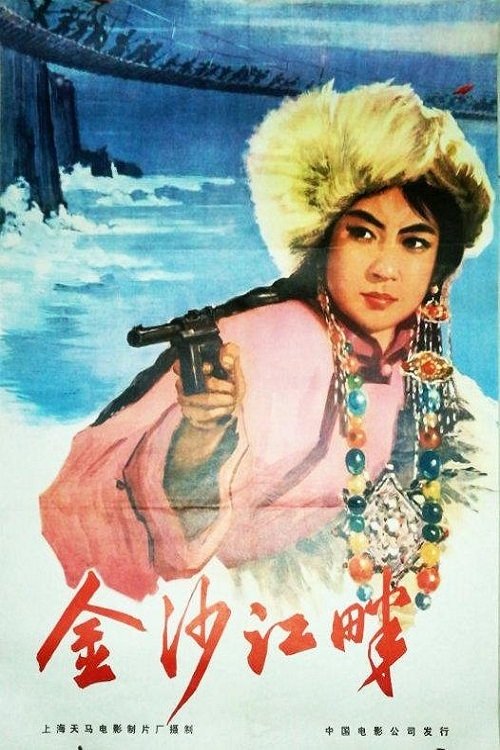
In 1936, the Long March of the Red Army passed through the Tibetan area by the Jinsha River. The Kuomintang colluded with the great local tyrant Qiu Wanli in an attempt to prevent the Red Army from crossing the river north. Qiu Wanli asks his minions to pretend to be the Red Army and rob the chieftain Sangge's only daughter Zhuma to provoke the relationship between the chieftain and the Red Army. The Red Army adhered to the party's ethnic policy, rescued Zhuma, and crossed the Jinsha River to the border of Tibetan areas. Qiu again sneaked into the Tibetan area. He said that Zhuma had been killed by the Red Army and provided ammunition and weapons for the chieftain to fight the Red Army. In order to expose the enemy's rumors, the Red Army instructor Jin Ming took a squad to escort Zhuma home.

Along The Jinsha River

0.0 1963
Red Crag

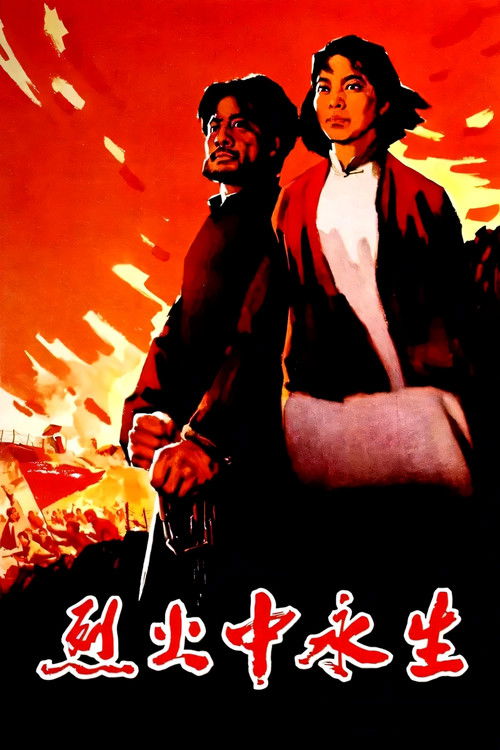
A taut wartime thriller, Red Crag: Life in Eternal Flame anticipates the paranoia and violence of the imminent Cultural Revolution while harking back to the aesthetic splendour of the Golden Age Shanghai cinema of the late 1940s. (This opulence is largely due to the work of cinematographer Zhu Jinming, the master visual stylist of Shangrao Concentration Camp and other key "Seventeen Years" films.) The film concerns a hard-boiled woman working in the Chongqing Communist underground during World War II, whose commitment to the guerrilla cause is only intensified after she witnesses her husband's head mounted on the city walls by the Nationalist forces.

Red Crag

10.0 1965