57 Matches Found

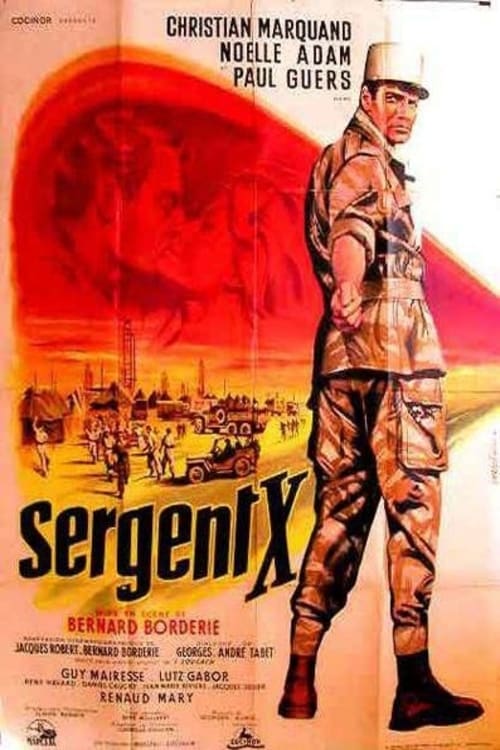
Sergeant X of the Foreign Legion

A remake and rewriting by director Bernard Borderie and scripters of a well-made 1932 film, this routine French drama seems a little outdated. The story has changed from a Russian officer who returns home from the war to find his wife has remarried, to a former paratrooper who tries to drive a stolen truck back from Morocco and suffers an accident -- and the same fate as the Russian. As a result of his injuries and the subsequent delay, the ex-military man is unable to get home as scheduled, and the woman he loves decides that he has left her. Once she "realizes" that supposed truth, she decides to marry her boss. As in the earlier film, one of the protagonists ends up in the French Foreign Legion and all three head toward a fateful meeting in a North African desert.

Sergeant X of the Foreign Legion

0.0 1960
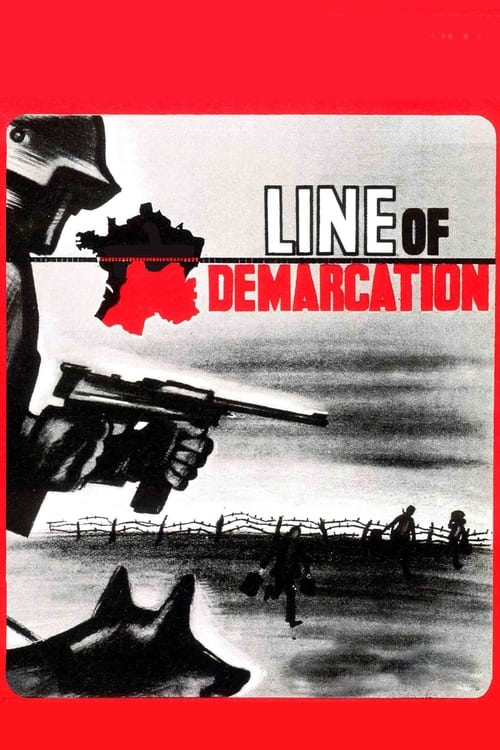
Line of Demarcation

It is based on upon the memoir Mémoires d'un agent secret de la France libre et La Ligne de démarcation by Gilbert Renault under his pseudonym Colonel Rémy. A small village in the Jura is split by the river Loue which creates the line of demarcation between Nazi occupied France and freedom. A French officer, Pierre, is released by the Nazi soldiers to find his chateau converted into a German command centre. Whilst he is obliged to co-operate with the enemy, his wife Mary supports the resistance movement and is willing to risk her life for it. The Nazis step up their activity against the resistance, insisting that any who attempt to cross the line of demarcation will be shot. When his wife is arrested, Pierre decides to switch his allegiance.

Line of Demarcation

6.2 1966
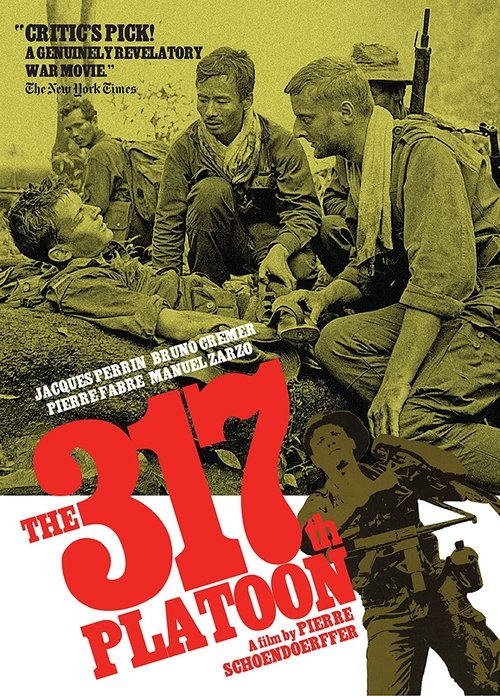
The 317th Platoon

In Laos, 1954, eight days before the french defeat in the Indochina war, the 317th platoon – four french soldiers and 41 laotian combatants – has been ordered to leave its outpost and to retreat for the plains of Diên Biên Phu, where the french army is getting stucked. Led by the inexperienced and idealistic sous-lieutenant Torrens, fresh out of the military academy, and by adjutant Willsdorf, a WWII veteran of the Werhmacht, the group must cross 150 kilometers of jungle. But dripping rainwater, hostile nature, and the Viêt-minh ambushes expose them to constant danger.

The 317th Platoon

7.4 1965
Women and War

In 1944, in a small village in Calvados, just as the Allies landed, a British plane was shot down. The wounded pilot seeks help. All the villagers, who speak only of resistance, refuse to help, for fear of reprisals. Only the mayor, Dr. Leproux, takes him in and nurses him back to health, then entrusts him to the Resistance. But the Germans get wind of the story and arrest Leproux. He is saved by Major Frantz. But the budding friendship between these two men "doesn't stop the drums", and the war is on.

Women and War

6.3 1961
The Day and the Hour

It's the spring of 1944 and Therese is in a hurry to get back to Paris. The trains aren't running from the village where she has gone to visit her father's grave and to fill two suitcases with food. Some British and American planes have been shot down and the Germans want to know where the pilots are hiding. An acquaintance has clearance to drive to Paris with a truckload of goats. After she is in the truck Therese discovers that two British pilots and an American pilot are back there with the goats. She must get the men on a train to Paris and to a safe house there, where there is no room for the American. Can she leave him at the Metro station trying to figure out the map?

The Day and the Hour

6.7 1963
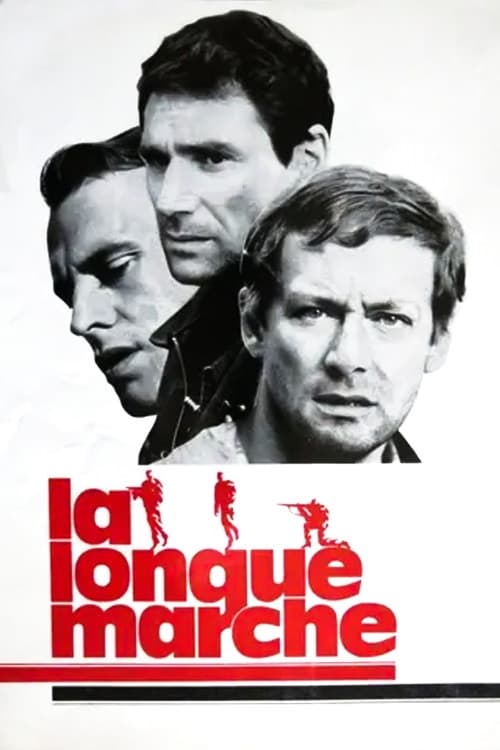
Long March

In June 1944, a young doctor, Chevalier, under the threat of guns, is forced to treat a wounded man in a camp of resistance fighters (maquisards). He recognizes the man, minister of the Third Republic, called Morel by his companions. Carnot, the chief of the maquisards, is suspicious of a doctor who expressly disapproves of the resistance and wants to have him shot as soon as he has treated Morel. Philippe, who is second in command, intervenes in favor of the Chevalier. Meanwhile, peasants denounce the maquisards to the Nazis and the camp is surrounded by the Germans. The camp is saved thanks to Philippe who takes command of the group. He decides to leave the shelter and they begin the long march through the Cévennes to rally maquisard Napoleon in the Vercors...
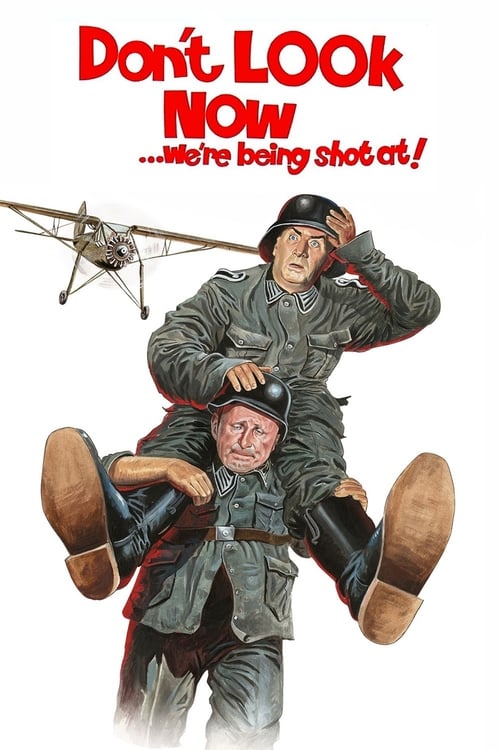
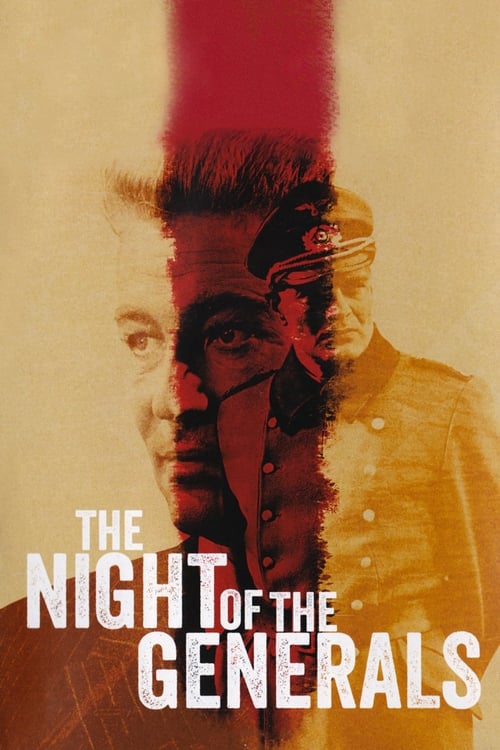
Long March

0.0 1966
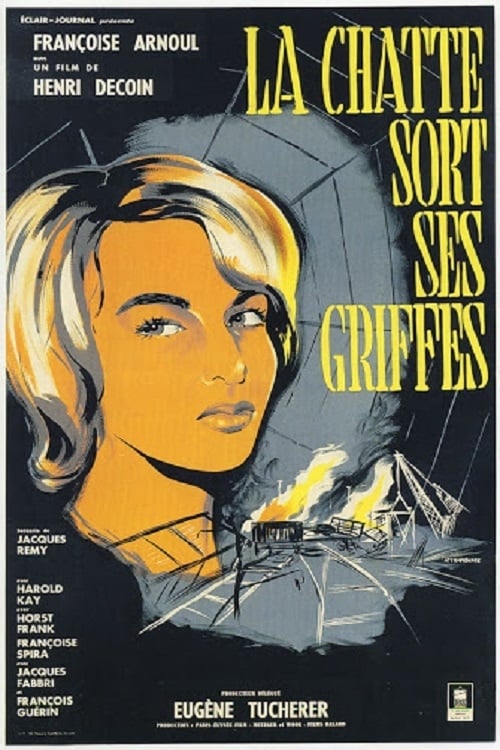
The Cat Shows Her Claws

France under the Occupation. Executed for treason against the Resistance, Cora, code-named "La Chatte", was left for dead. Recovered and cared for by the Germans, Dr. von Hollwitz brainwashed her to control her and use her as a counter-espionage. In the spring of 1944, her escape was faked so that she could resume contact with the Resistance. She has to scupper the mission of Charles, an engineer with the SNCF, to blow up a train loaded with V1s intended to power the launch pads set up on the French coast to bomb London. But at the last moment, La Chatte regains her lucidity.

The Cat Shows Her Claws

5.2 1960
The Honors of War

One morning in August 1944, the inhabitants of a French village are celebrating their premature liberation. The festivities are interrupted by the arrival of an exhausted, leaderless German detachment. A few kilometers away, the inhabitants of the village of Muzière negotiate with the Germans and agree to a truce. But the arrival of a Wehrmacht captain, anxious to regain control of the men, puts an end to this fragile peace process. The captain suggested meeting the Americans and surrendering to regular troops rather than civilians. The inhabitants of Muzière, believing the truce to be broken, fire on the Germans and, on this misunderstanding, the guns start talking again.

The Honors of War

4.6 1962
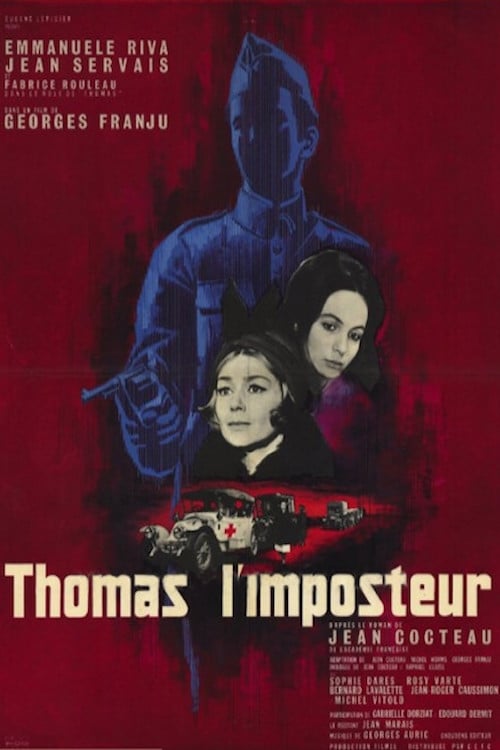
Thomas the Impostor

In the First World War, when Paris is expected to fall to the Germans, the attractive widow, Princesse de Bormes, organises a convoy of cars to evacuate the wounded from the front, and bring them back to her villa in Paris to recuperate. The authorities will not give them passes until an innocent 16-year-old boy, Guillaume Thomas de Fontenoy, joins them and is mistaken as the nephew of the popular General de Fontenoy. The Princess is enraptured by Thomas and her daughter, Henriette, falls in love with him. However Thomas feels impelled to see more of the action of the war.

Thomas the Impostor

6.4 1965
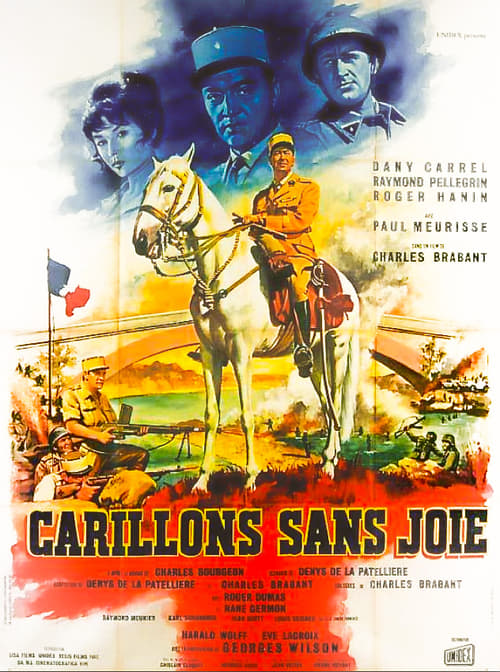
Bells Without Joy

In November 1942, American troops landed in Tunisia. German paratroopers were immediately launched and occupied Tunis. A French squadron of chasseurs d'Afrique was sent to Medjez-el Bab with the mission of occupying the bridge over the Medjerda. But the captain is mute and the cavalrymen don't know whether the operation is being prepared against the Germans or the Allies. The first hypothesis inflames Maréchal des Logis Bourgeon and his friend Maurice, who have not forgotten the defeat of '40. In the village, Maurice meets up with his friend Léa, a refugee, and discovers with fury that she is Jewish, because he doesn't like Jews any more than he likes English or Germans! The hunters set up camp on the bridge. Soon, a German column appears and demands passage. The captain refuses, awaiting orders from Vichy. But in Tunis, confusion reigns. Finally, the captain himself takes the initiative to oppose the passage of the German troops...
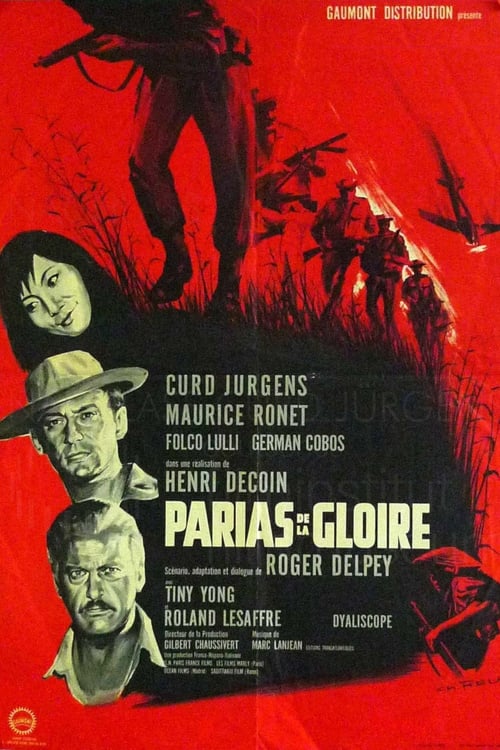
Bells Without Joy

3.2 1962
Champagne for Savages

A diverse group of friends gather to celebrate a witless woman's birthday in this comedy drama set in France during World War II. The guests include an uncle who is a Nazi collaborator, a blind war veteran, a simpering physician, an arrogant educator, a patriotic girl, and the husband of the guest of honor. When some German soldiers are killed outside the house, the group is told by the Gestapo that they must choose among themselves two who will be shot if the killer is not caught. If two victims are not chosen, all seven at the party will be captured. Things sound pretty grim, but the black comedy begins when all seven try to save themselves by any means possible.
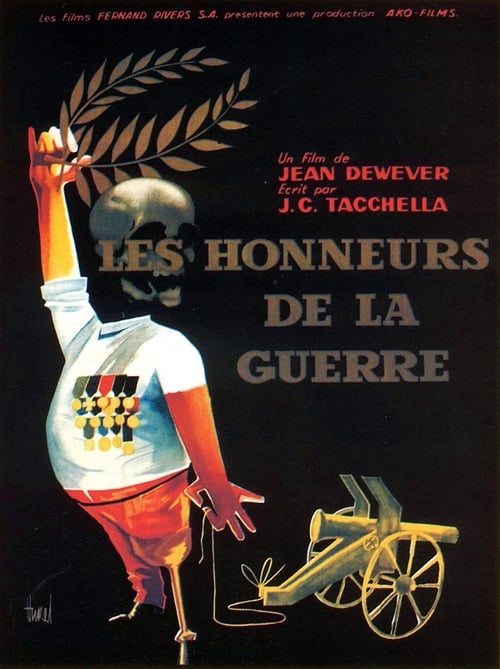
Champagne for Savages

6.1 1964
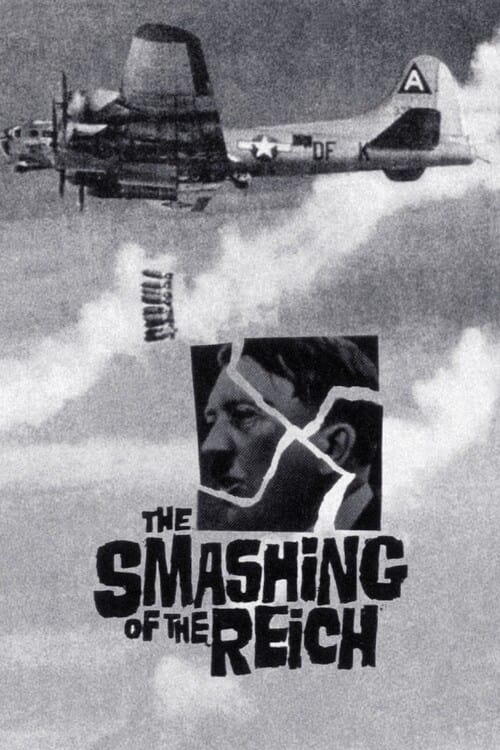
The Smashing of the Reich

An unpublished documentary film proposed in restored version. 100 million meters of film viewing, film libraries inventoried 11 countries and 3 years of work were needed to bring these documents. This documentary evokes the destruction of the Nazi war machine with a particular emphasis on air power. The most significant events are recounted as the Normandy landings, the battle of Paris, the last German offensive with the historical siege of Bastogne and the landing on the island of Elba. Also shown are the bombing of German industrial centers, and the liberation of concentration camps.

The Smashing of the Reich

0.0 1961
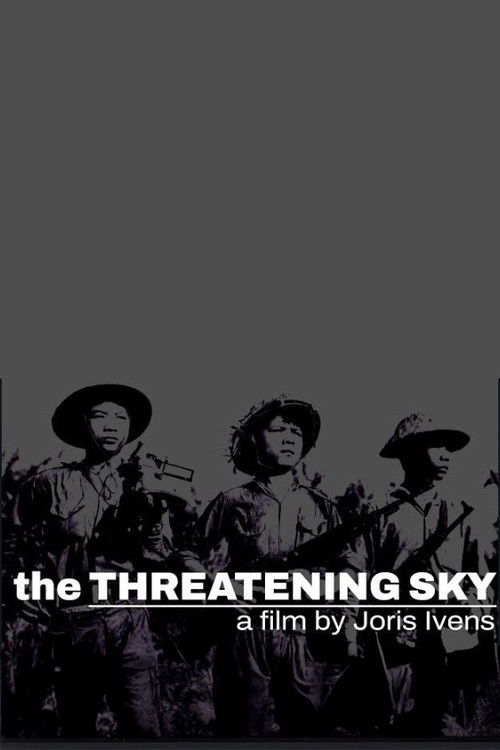
The Threatening Sky

This documentary presents the Vietnam War as seen from within Vietnam, focusing on civilian life, industrial and agricultural labor, and organized resistance under sustained aerial bombardment. Introduced by Bertrand Russell, the film situates the conflict within a broader history of anti-occupation struggles, drawing parallels to World War II resistance movements. Footage includes interviews with Vietnamese leaders, scenes of air defense, and mass political mobilization.

The Threatening Sky

10.0 1966