41 Matches Found

Enfant Terrible

When 22-year-old Rainer Werner Fassbinder storms the stage of a small, progressive theatre in Munich 1967, and seizes the production without further ado, nobody suspects this brazen young rebel to become one of the most important post-war German filmmakers. Despite early setbacks, many of his films breakout at the most renowned films festivals and polarise audience, critics and filmmakers alike. His radical views and self-exploitation, as well as his longing for love, have made him one of the most fascinating film directors of this time.

Enfant Terrible

4.3 2020

Merkel: Anatomy of a Crisis

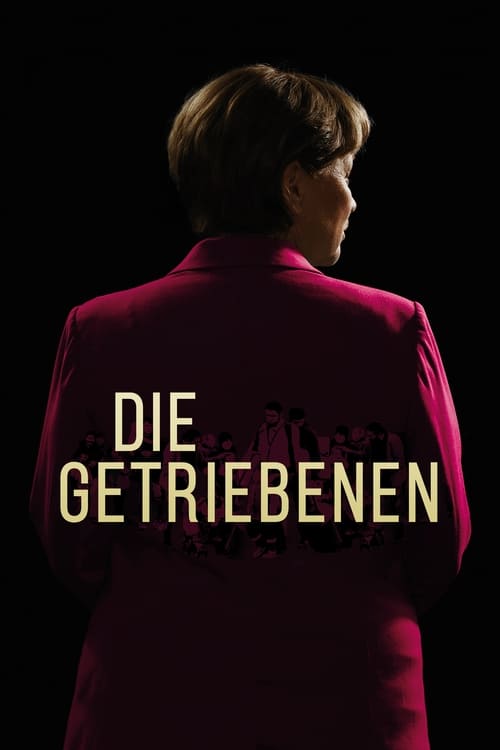
Angela Merkel's decision in autumn 2015 to open the borders for refugees split the country - some praised the moral stance, others criticized the surrender of sovereignty. Yet what would appear to be well-planned activity is in reality a policy of muddling along, chance, trial and error. The Driven Ones is a chronicle of the refugee crisis which shows that the political actors are being driven along, crushed between self-imposed constraints and events that have spun out of control.

Merkel: Anatomy of a Crisis

6.1 2020

Louis van Beethoven

1779. Eight-year-old Ludwig van Beethoven, called "Louis", is already known as a musical prodigy. He learns to go his own way - much to the dismay of the people around him. Some years later, he meets Mozart during times of political upheaval. The unconventional genius and French Revolution are sparking a fire in Louis' heart; he doesn't want to serve a master - only the arts. Facing times of family tragedies and unrequited love, he almost gives up. However, Louis makes it to Vienna to study under Haydn in 1792, and the rest is history. Who was this man, whose music has since touched countless hearts and minds? At the end of his life, the master is isolated by loss of loved ones and hearing. Surely though, he was way ahead of his times.

Louis van Beethoven

6.7 2020

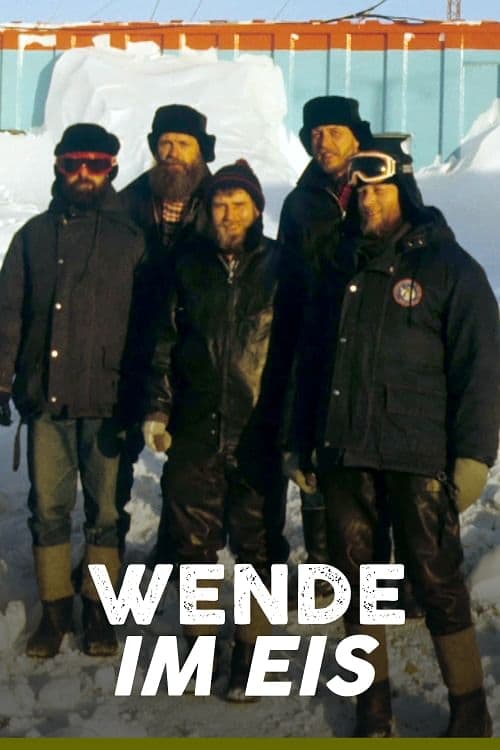
Reunification in the Ice: The Story of the Last GDR Antarctic Explorers

In 1989, thirteen GDR scientists and technicians set off from East Berlin to the Georg Forster research station in the Antarctic. During their expedition the Berlin Wall fell on November 9th. Cut off from the images that go around the world, the men can only experience the historical events passively. When they returned in the spring of 1991, their homeland was a foreign country. The documentary reconstructs the thoughts and feelings of the East German researchers on the basis of eyewitness accounts, diary excerpts, letters, film material, grandiose landscape shots from the location of the action and unique photos to make the consequences of the events tens of thousands of kilometers away on the small GDR expedition in the middle of the eternal ice tangible.

Reunification in the Ice: The Story of the Last GDR Antarctic Explorers

8.0 2020
Caral: Sacred City of the Andes

The Sacred City of Caral or Caral-Supe is the capital of the Norte Chico Civilization of Supe located in the Supe Valley, 200 km (124 miles) north of Lima. The Sacred City of Caral is the earliest known civilization in the Americas, it dates to the Late Archaic period. Radiocarbon analysis performed by the Caral-Supe Special Archaeological Project (PEACS) dates its development between 3000 to 1800 B.C.. It is believed that this civilization started by the merging of small villages based on trade of agricultural and fishing products. Its importance rests on the success of techniques of domestication of cotton, beans, potatoes, chilis, squash among other products. Success in agriculture was due to the development of water canals, reservoirs and terraces. They used guano, bird excrement, and anchovies as fertilizer.

Caral: Sacred City of the Andes

8.0 2020

Kommando Selbstzerstörung - Der Untergang der Kaiserlichen Flotte

The sinking of the German fleet interned at Scapa-Flow (Orkney Islands), June 21, 1919. We know that one of the stipulations of the armistice signed with Germany on November 11, 1918 was that that power's surface warships were to be "immediately decommissioned and interned in neutral or Allied ports, and remain there under the supervision of the Allies and the United States, guard detachments only being maintained on board". In fact, all the ships designated by the Allies - 11 battleships, 5 battlecruisers, 7 light cruisers and 50 destroyers - had, a few days after the armistice, been assembled in Scapa-Flow Bay, in the center of the Orkney archipelago, i.e. north of Scotland, and had remained there ever since, under the supervision of the English naval authorities, but under the effective authority of German Admiral von Reuter.
Kommando Selbstzerstörung - Der Untergang der Kaiserlichen Flotte

8.0 2020
Tod einer Edelhure: Rosemarie Nitribitt

It is the most spectacular criminal case of the post-war era: the murder of the Frankfurt noblewoman Rosemarie Nitribitt moves the still young Federal Republic in the years of the economic miracle. However, the story from Frankfurt's red-light district quickly mutates into a full-blown moral scandal in the stuffy Germany of the 1950s. And the police, who come under increasing pressure, make one blunder after another. The case turns into a farce and a murderer is never found. Can a fresh look at the old files solve this mysterious cold case today?

Tod einer Edelhure: Rosemarie Nitribitt

8.0 2020
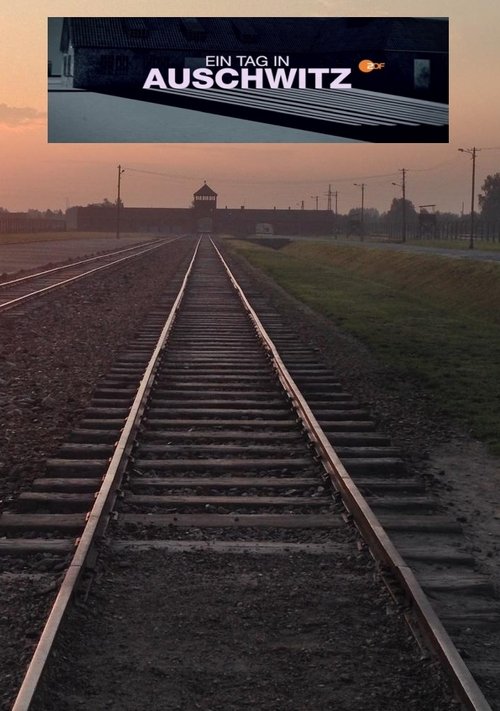
Auschwitz - One Day

Today, the word "Auschwitz" is a synonym for the Holocaust. Thousands of Jews died there every day. With the help of some acted scenes, photos and graphics, the film tells of a day in May 1944. The starting point is a unique document: a photo album created by the SS perpetrators themselves. Almost all of the photos were taken at the end of May 1944, in just a few days. They show the cruel routine, the arrival of the victims, their "selection" on the ramp, the robbery of their property and the transformation of all those who were not immediately killed, into shaved, uniformed slaves. One survivor is Irina Weiss. On a photo she recognizes her little brothers and her mother - waiting unsuspectingly near the crematorium. The SS photographers captured all of this. Their identity is known today: one of them was Bernhard Walter, a "Stabsscharführer" who lived with his wife and three children near the extermination camp.

Auschwitz - One Day

6.9 2020
Baseballschlägerjahre - Die Wendegeneration und rechte Gewalt

After the end of the GDR, thrashings, threats and hunts were part of everyday life. In the years after the reunification of the early 1990s, hatred, racism and violence against foreigners and supporters of leftist ideology broken out in Eastern Germany. Most of those involved was young people. In many cities and towns, the streets and squares belonged to the right-wing scene, organized in neo-Nazi comradeships. Bomber jackets, combat boots and the Hitler salute showed the intimidated rest where they were. The baseball bat was a popular weapon. There were riots, attacks on asylum seekers' homes, mass brawls and hunt downs to those who look or think differently. It doesn't took long and the first deaths were to be mourned. The majority of the Eastern German population looked the other way or even applauded the deeds. A bad omen for the political development of later years. In six film segments, a team of authors take a look at the time reflected in interviews with contemporary witnesses.

Baseballschlägerjahre - Die Wendegeneration und rechte Gewalt

6.0 2020
60 Jahre Pille - Wo bleibt die Pille für den Mann?

In 2020, the contraceptive pill will be 60 and has revolutionized the relationship between the sexes. The Pill brought freedom, but today more and more women are seeking freedom from the Pill. And they ask: Why is there no pill for men? Scientists all over the world are doing research on the Pill for Men - and in the end there is a surprising discovery: hormonal and non-hormonal contraception for men has been around for a long time. And it has been used successfully for 50 years.

60 Jahre Pille - Wo bleibt die Pille für den Mann?

0.0 2020