44 Matches Found

The Beatles Sing for Shell

Cameras from the Australian Channel 9 recorded the sixth and final show of the Melbourne leg of The Beatles' world tour on 17 June 1964. It was screened on 1 July 1964 as an hour-long special, The Beatles Sing For Shell, named after the oil company which sponsored the broadcast. Nine of The Beatles' Melbourne performances were included in the show (the others edited out and discarded at the insistence of Beatles manager Brian Epstein): I Saw Her Standing There, You Can't Do That, All My Loving, She Loves You, Till There Was You, Roll Over Beethoven, Can't Buy Me Love, Twist And Shout and Long Tall Sally. The complete unedited concert (from an alternate audio feed) was also aired on Australian radio.

The Beatles Sing for Shell

0.0 1964
Marinetti

Albie Thoms' Marinetti was the culmination of the synthetic environments that the UBU group had pioneered in Australia; festive public 'happenings' that combined the energy and volume of creative rock and jazz with the mesmeric effect of multi-dimensional lightshows. Another kind of culmination: Marinetti records most of the principal collaborators in the UBU film group, like Aggy Read and the Perrys. Uniquely valuable as a document of Australia's late 1960s counter-culture, the soundtrack provides the best indication of the unrestrained liberty that bands like Tully and the John Sangster Underground band some of whose members perform on this recording were famously achieving in their improvisations of the period.

Marinetti

6.8 1969
The Case For Books

This film about Library services in Australia shows some of the work of the Commonwealth Parliamentary Library, the National Library with its varied resources and examples of State, University, special and public services suggesting their value in meeting needs for information at all levels. The library movement has become a vital part of Australian life. How libraries have fitted into society all over Australia, from the bustle of Sydney's Kings Cross to the remote outback.

The Case For Books

0.0 1966
The Living North

This film makes a general survey of the Northern Territory of Australia and indicates its potential in regard to many already established industries. These include agriculture, mining, fisheries, cattle raising, pearling and the like. The Territory is still a land of many challenging problems; its greatest limiting factor being the lack of water. In recent years transportation has been improved and education approached with vision and imagination. Housing is also being developed. Two thirds of the Territory’s work force is in Government employ.

The Living North

0.0 1960
Life in Australia: Cairns

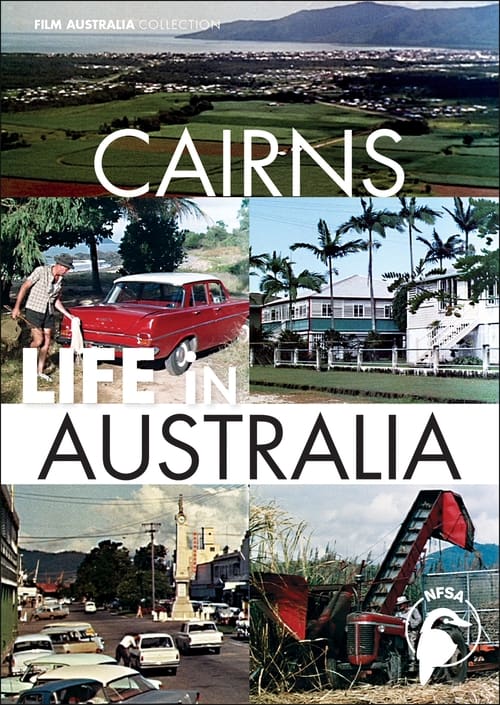
A small city in the tropical north of Queensland, Cairns boasts a life that is leisurely and comfortable. The tempo quickens, however, at cane-cutting time when the sugar is harvested, and in winter when tourists come north to escape the cold. The Life In Australia series portrays Australian cities and rural centres as happy, lively places where good homes, abundant jobs, schools, hospitals and amenities provide the foundation for a relaxed lifestyle where sport, shopping, religion and even art combine to create a homogenous and prosperous society.

Life in Australia: Cairns

0.0 1964
Along the Sepik

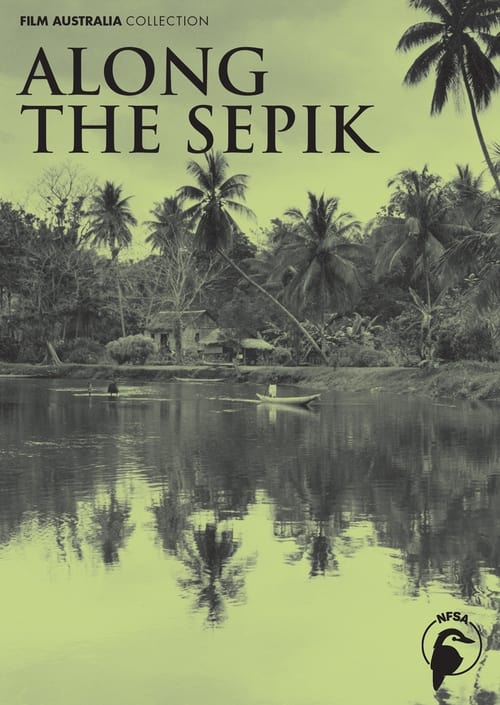
Set on the Upper Sepik River in New Guinea, this film records the day-to-day experiences of Kiap (one-man representative of the Australian government in regional areas) Barry Downes as he patrols an area that in 1963 had only recently been brought under control from headhunters. As well as being a record of the role of the colonial administration, Along the Sepik offers insights into some tribal communities' cultures through depictions of their spirit houses and traditional 'sing sing' ceremonies. Downes investigates a murder, and the culprit is caught and tried by a magistrate in a jungle courthouse under the Australian flag, on the edge of the Sepik River. Australian patrol officers and their men operated under rugged conditions to bring western law and order to this remote area. The film also portrays some of the impact the colonial government had on regional, traditional communities.

Along the Sepik

0.0 1964
Adelaide: Flowers and Festival

This film shows events in the biennial Festival of Arts and the annual Flower Day of 1968. Adelaide celebrated Flower Day annually from 1938 to 1975 and it made a return in 2021. The footage includes a ‘welcome said with flowers’ to performers Marlene Dietrich, Marcella Reale, Morag Beaton, Lucero Tena, and the Elizabethan Theatre Trust Orchestra. There is also a look inside the Art Gallery’s display for the 5th Adelaide Festival of Arts. This is quite possibly the moment the phrase “Mad March” was coined!

Adelaide: Flowers and Festival

0.0 1969
The Islanders

Above the tip of Cape York, beyond the northernmost point of the Australian continent, are the Torres Strait Islands. The economy here is based on home gardens and pearlshell fishing. The culture, with its basis in music, dancing and ceremony, provides a striking contrast to that of mainland Australia. This film, shot in the late 1960s, shows how strongly old traditions still affect Torres Strait Islander people, even though they also have most of the trappings of modern life.

The Islanders

0.0 1968
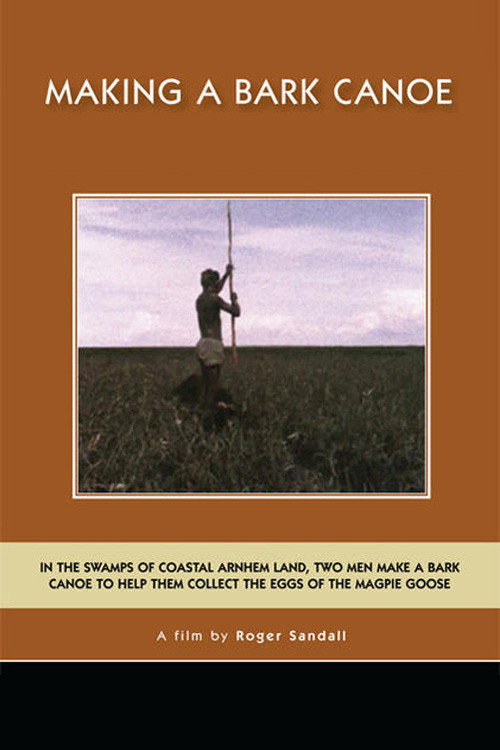
Making A Bark Canoe

An ethnographic documentary directed by Roger Sandall, recording the construction of a bark canoe by two Aboriginal men, Djurkuwidi and Wangamaru, on the north coast of Arnhem Land. Filmed in the coastal swamps of Buckingham Bay near the end of the wet season, the film follows the process from the selection and stripping of a stringybark gum tree through to the completed canoe in use for hunting magpie geese and collecting eggs. Sandall’s narration explains the techniques involved and notes changes from earlier practices.

Making A Bark Canoe

0.0 1969