164 Matches Found

A Capital Plan

This short documentary features a portrait of Ottawa in the mid-20th century, as the nascent Canadian capital grew with force but without direction. Street congestion, air pollution, and rail traffic were all the negative results of a city that had grown without being properly planned. French architect and urban designer Jacques Gréber stepped in to create a far-sighted plan for the future development of Ottawa. With tracks moved, factories relocated, and neighbourhoods redesigned as separate communities, Ottawa became the capital city of true beauty and dignity we know today.

A Capital Plan

0.0 1949
Newfoundland: Atlantic Province

With simple ceremony on Parliament Hill, Ottawa, Newfoundlanders are welcomed as fellow-Canadians. Prime Minister St. Laurent starting off the carving of Newfoundland's coat of arms in the tenth and formerly blank shield over the entrance to the Parliament Buildings, writing in stone another chapter of Confederation. So begins this survey of Canada's tenth province, Newfoundland, its resources and how its people live. The film takes us to St. John's, Corner Brook, Bell Island, and includes a visit to Labrador where we see the giant airport at Gander.

Newfoundland: Atlantic Province

0.0 1949
Fighting Sea-Fleas

First half of film portrays life in port, including rum issue, distribution of letters, and taking on ammunition, the remainder tells the story of an action against German S-boats, in a stock-shot compilation including some captured film. Officers briefed; boats leave harbour, put to sea, "action", a Nazi naval flag is reclaimed from wreckage in the sea, and the motor torpedo boat (MTB) returns to port flying it below the British White Ensign. Film ends with a sequence showing the funeral of a Canadian seaman.

Fighting Sea-Fleas

0.0 1944
Children from Overseas

A WWII film about children evacuated from Britain and sent to Canada for their safety. The film begins in England with children seeking shelter as anti-aircraft guns roar outside. On their arrival in Canada, they are thrilled by the brightly lit cities, powerful Canadian trains, hot dogs and ice cream. They find, too, that instead of becoming Mounties or cowboys, they have to go to school. The closing sequence shows them learning to ski and skate and preparing for Christmas in their new homes.

Children from Overseas

0.0 1940
Of Japanese Descent

A public relations film which implies that the relocation and interment of Japanese Canadians was benign and necessary. Views of a Vancouver slum, idle fishing fleet, and houses on outskirts. Sequences on rehabilitated ghost towns in the Slocan Valley including Nakusp. Sequences on the new town of Tashme being built. Sequences on Japanese making a living cutting firewood, operating lumber mills, farming. Interior of tuberculosis sanatorium and patients. Sequences on Japanese folk festival and dancing. Focus on life in Tashme with shots of happy people, hospital, school, general store, bakery, and a troop of boy scouts.

Of Japanese Descent

0.0 1945
Passport to Canada

In the 1940s thousands of immigrants are coming from Europe to Canada offering strength and skills in exchange for hope and a new life. 'The long night is ended, the morning draws nigh,' sums up the feelings of those who are sped through immigration formalities on their way to a fresh existence. Though the language may be different, these new Canadians soon find things in Canada that remind them of Holland, Poland or Belgium. Some immigrants carry on with their old trades--sewing, farming, diamond cutting. Others, on huge projects such as Des Joachims, use their muscles to help build their adopted homeland, while their love of culture and their skilled professions will make valuable contributions to Canada in the future.

Passport to Canada

0.0 1949
Alexis Tremblay: Habitant

This short documentary illustrates rural French Canadian life in the early 1940s. The film follows Alexis Tremblay and his family through the busy autumn days as they bring in the harvest and help with bread baking and soap making. Winter sees the children revelling in outdoor sports while the women are busy with their weaving, and, with the coming of spring young and old alike repair to the fields once more to plough the earth in preparation for another season of varied crops. One of the first NFB films to be produced, directed, written and shot by women.

Alexis Tremblay: Habitant

0.0 1943
Heart of Spain

The first production from Frontier Films, the film production collective that was the successor to NYKino and the Workers Film and Photo League, Heart of Spain focuses on the Spanish Civil War, a conflict that became a touchstone of its era and was the most forceful opposition to the rising threat of fascism in Europe. Heart of Spain was begun by Geza Karpathi and Herbert Kline, who ultimately turned their footage over to Paul Strand, Leo Hurwitz, and Ben Maddow to make the film. It is compelling both for its shrewd formal aesthetics and as a sympathetic human document of the war.

Heart of Spain

7.3 1937
The Royal Visit

This feature documentary offers a complete record of the 1939 Royal Tour of Canada by King George VI and Queen Elizabeth. The film opens as the royal couple makes a stop in Québec city, where Premier Duplessis greets them. They then visit Montréal and meet mayor Camilien Houde. A visit to Ottawa brings them to Parliament, where Prime Minister MacKenzie King is present. The visit continues throughout Ontario, the prairies, and western Canada. The Royal couple also makes a brief stop in Washington and meets President Franklin Roosevelt. They then stop in on the Maritime provinces before boarding a Royal yacht for the journey back to England.

The Royal Visit

0.0 1939
Science in Bloom

Montreal’s Botanical Gardens are a storehouse of the wonders of nature. From all over the world scientists have gathered a living collection of plants and flowers, providing delight for the casual visitor and rich material for the student of botany. The actual process of plant growth is revealed for us by the time-lapse camera. We see a practical result of the botanist’s work in British Columbia’s important seed industry. Children, too, at the Montreal Botanical Gardens, cultivating their own plots of ground, take part in the quest for the secrets of nature.

Science in Bloom

0.0 1948
Break-through

On June 6, 1944, supported by an immense naval armada, Allied troops, including the First Canadian Army, led by General Harry Crerar, launch an amphibious invasion of Normandy, France. Facing a fierce resistance by Nazi forces, the Allied armies establish a beachhead on the Normandy coast. Seeking redemption after their earlier rout at the Dieppe raid in 1942, the Canadians are able to gain control of Juno Beach. Before regrouping for an advance into France, Allied troops are replenished by transport of war materiél and reinforcements. The Canadian contingent is tasked with an attack on Caen, France, held by the German 7th Army.

Break-through

0.0 1944
The Home Town Paper

The weekly newspaper is the cornerstone of many a town, the newspaper which is a reflection of the town's values and thoughts. Its editor is the newspaper personified. He is much like a civil servant, working for the people of the community. His editorial is the most personal yet widespread contact he has with the community. The letters to the editor are democracy in action. News from the other side of the globe, which could affect townsfolk, makes it way to them through the newspaper. These world stories are equally as important as the news from around the corner, which again is a reflection of the town. The newspaper's main revenue source is through advertising, which in a way is its own form of news.

The Home Town Paper

0.0 1948
How to Build an Igloo

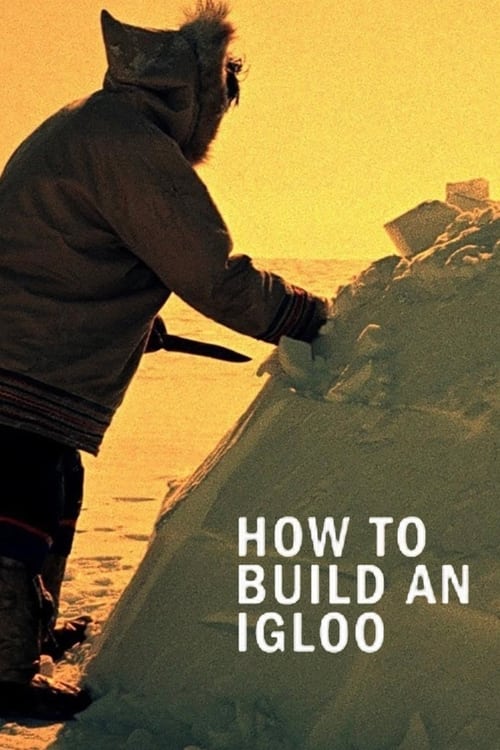
This classic short film shows how to make an igloo using only snow and a knife. Two Inuit men in Canada’s Far North choose the site, cut and place snow blocks and create an entrance--a shelter completed in one-and-a-half hours. The commentary explains that the interior warmth and the wind outside cement the snow blocks firmly together. As the short winter day darkens, the two builders move their caribou sleeping robes and extra skins indoors, confident of spending a snug night in the midst of the Arctic cold!

How to Build an Igloo

6.7 1949