527 Matches Found

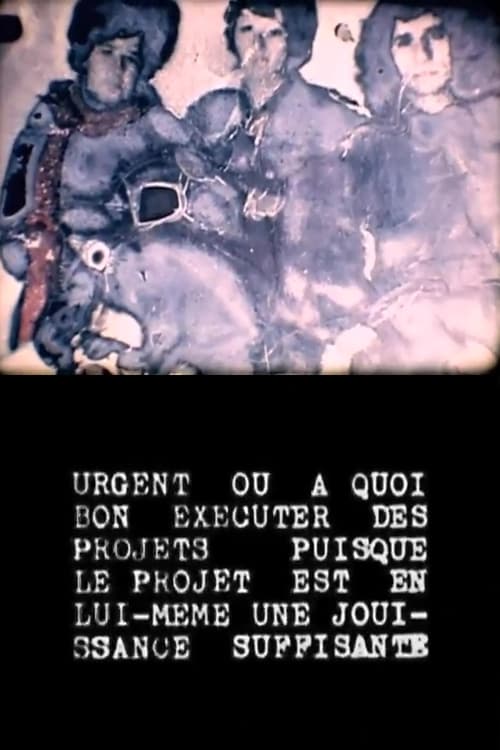
Urgent ou à quoi bon exécuter des projets puisque le projet est en lui-même une jouissance suffisante

Gérard Courant applies the Lettrist editing techniques of Isidore Isou to footage of late 70's pop culture. Courant posits that his cinema offers an aggressive détournement to the French mainstream, reifying a Duchampian view of film: "I believe in impossible movies and works without meaning... I believe in the anti-movie. I believe in the non-movie. I believe in Urgent... My first full length movie that is so anti-everything that I sometimes wonder if it really does exist!"

Urgent ou à quoi bon exécuter des projets puisque le projet est en lui-même une jouissance suffisante

5.5 1977
The Porno King

This is a documentary on the 70's French porn industry. There are generally two kinds of porn documentaries--those that actually take an insightful look behind the scenes, and those that are just an excuse to show a lot of nudity and XXX porn footage. This is actually somewhere in between. It's generously seasoned with porn footage, but there are also a lot of (fully-clothed) interviews, and they even talk to the owners of porn theaters, some typical porn customers (including some pre-adolescent boys who are walking by the the theater--I wonder what their parents thought of that?), as well as a guy who makes promotional billboards for porn movies although he claims never to have seen one!

The Porno King

4.5 1976
Cinématon

Cinématon is a 156-hour long experimental film by French director Gérard Courant. It was the longest film ever released until 2011. Composed over 36 years from 1978 until 2006, it consists of a series of over 2,821 silent vignettes (cinématons), each 3 minutes and 25 seconds long, of various celebrities, artists, journalists and friends of the director, each doing whatever they want for the allotted time. Subjects of the film include directors Barbet Schroeder, Nagisa Oshima, Volker Schlöndorff, Ken Loach, Benjamin Cuq, Youssef Chahine, Wim Wenders, Joseph Losey, Jean-Luc Godard, Samuel Fuller and Terry Gilliam, chess grandmaster Joël Lautier, and actors Roberto Benigni, Stéphane Audran, Julie Delpy and Lesley Chatterley. Gilliam is featured eating a 100-franc note, while Fuller smokes a cigar. Courant's favourite subject was a 7-month-old baby. The film was screened in its then-entirety in Avignon in November 2009 and was screened in Redondo Beach, CA on April 9, 2010.
Cinématon

4.3 1978
Muhammad Ali, the Greatest

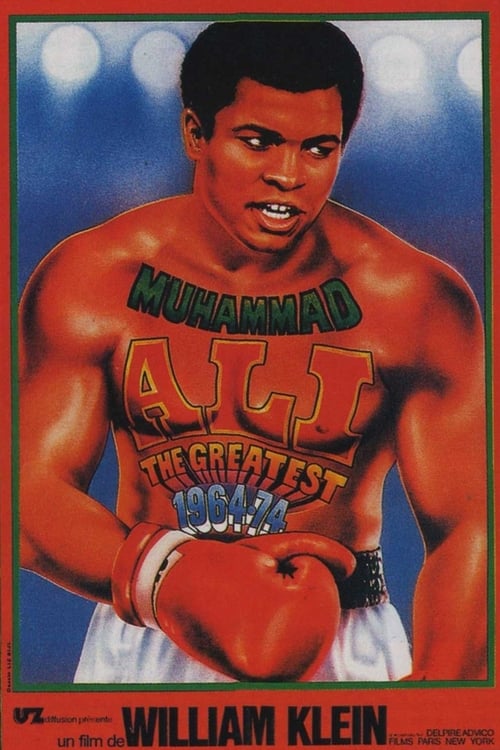
Universally accepted as a true icon of the 20th century, Muhammad Ali’s phenomenal achievements spanned sport, politics and religion. One man – photographer William Klein had comprehensive access to the events that shaped Ali’s legend. In 1964, the young gregarious Cassius Clay successfully defeated the seemingly invincible Heavyweight Champion of the World Sonny Liston – the manner of Clay’s victory and his amazing persona made him an instant superstar. Through this incredible period, and Clay’s subsequent rematches with Liston, William Klein enjoyed unrivalled access top Clay’s camp – witnessing at first hand Cassius Clay becoming Muhammad Ali and angering the American people with his allegiance to Islam. Forward to Zaire 1974, and the return of Muhammad Ali to the world stage to face another invincible champion George Foreman. As Ali reclaimed the crown for a second time, Klein was ever present, capturing the full story at close quarter.

Muhammad Ali, the Greatest

5.9 1974
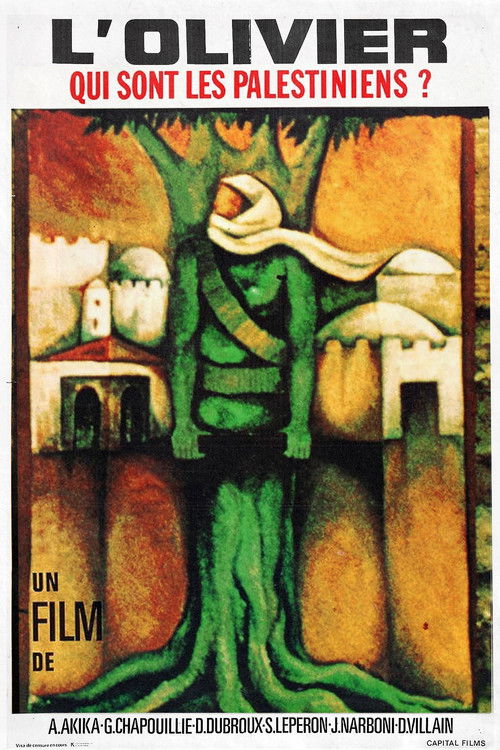
The Olive Tree

Filmed between 1973 and 1975, L’Olivier was produced by the Vincennes Cinema Group. This activist collective of teachers and filmmakers, formed on the occasion of this film, attempts to explain the Palestinian problem through interviews. The Olivier was one of the first films to attempt to give substance to what was still largely ignored in the West: the existence of the Palestinian people and their fight to recover their rights. L'Olivier responds to a concern: the already weak support of French public opinion for the Palestinian cause diminished following the Munich operation of 1972. Structured in such a way as to tell the Palestinian story and explain the state of the struggle at the time, the film appeals to global militant solidarity and, in particular, to European political commitments.

The Olive Tree

10.0 1976
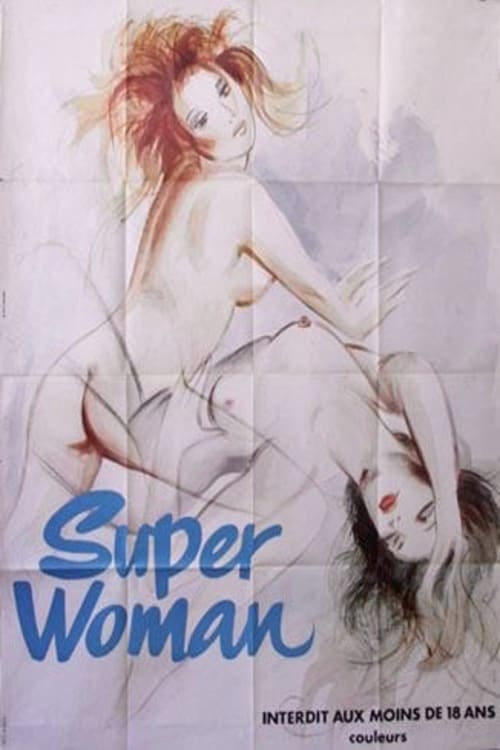
Super Woman

In the form of an investigative report, Super Woman offers a dive into the world of transvestites and transsexuals who, in 1975, brightened up certain Parisian cabarets such as the Carrousel, the Etrier, the Alcazar or Chez Michou... The latter introduces us to two of its stars, Duduche and Fifi, who evokes his encounters with Sylvie Vartan, whom he imitates to perfection. Then an investigator goes to the Carrousel and meets Claudie, Laurence, Peggy, Albane, Griselleda, Maryline and Kristel.

Super Woman

1.0 1976
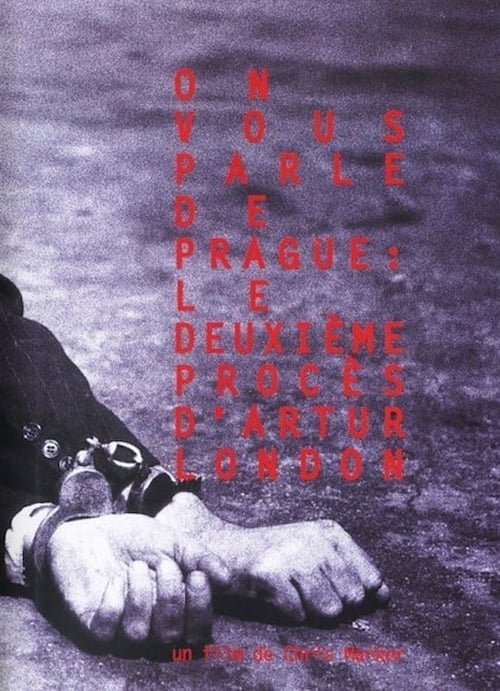
You Speak of Prague: The Second Trial of Artur London

Artur London was arrested in 1951 in a Stalinist purge, imprisoned and tortured for two years and forced to confess in the Slansky Trial, one of the last Stalinist "show trials" in Eastern Europe. The documentary explores some of the reasons for the controversy aroused by Costa-Gavras' The Confession, which had been accused of being anti-communist, and it highlights the political importance of filmmaking which, by its nature, is a fiction intended for the general public.

You Speak of Prague: The Second Trial of Artur London

6.2 1971
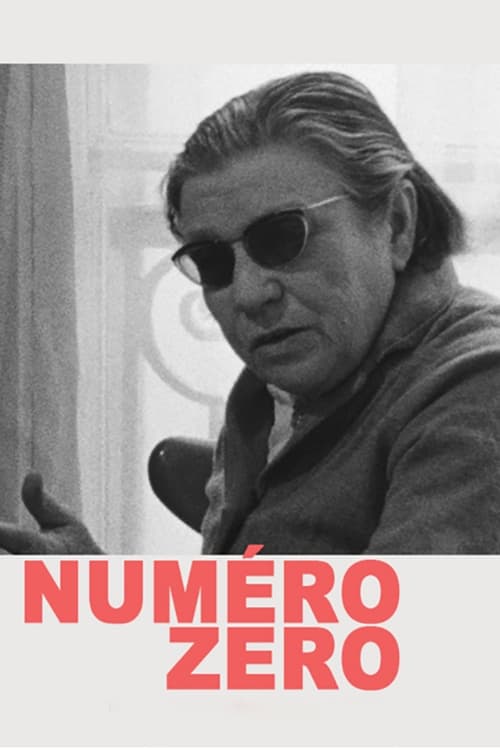
Numéro zéro

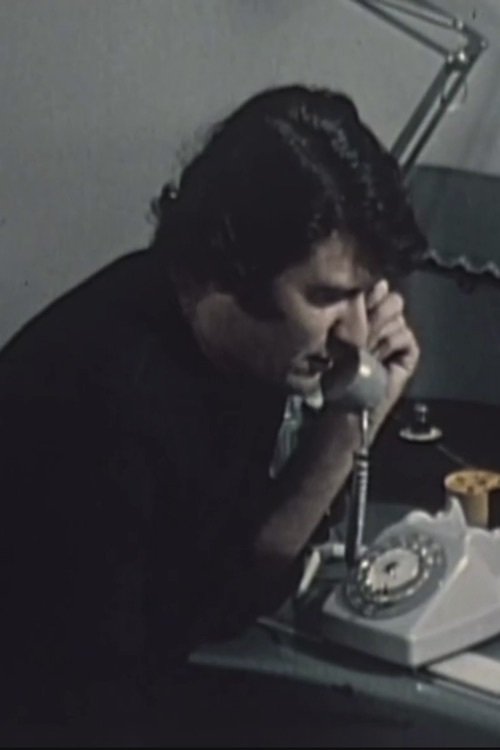
A family portrait in which the director profiles his grandmother, Odette Robert. Eustache includes in the film the conditions of its production — he is seated at the table with her, pours her some whiskey, speaks with the camera operator, manipulates the clapboard at the head and tail of the reels, and even takes a phone call. Robert, who was seventy-one, speaks rapidly and tells the story of her life, starting from her early childhood in villages in the Bordeaux region of France. A shorter version of the film ("Odette Robert") was edited in 1980 to be broadcast on television on TF1. The complete film only gained exposure in 2002, when it was salvaged by Boris Eustache, Thierry Lounas, João Bénard da Costa, Jean-Marie Straub, and Pedro Costa.

Numéro zéro

9.3 1971
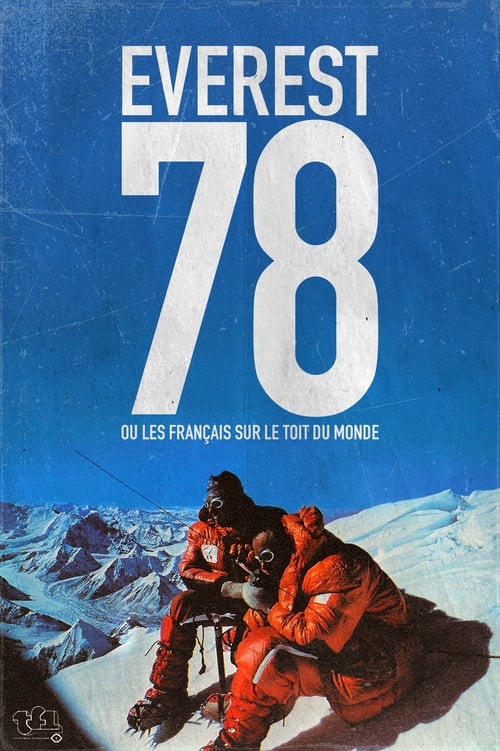
Everest 78, or the French on top of the world

It was a sporting feat, a national feat, but also and above all a technical feat: on October 15, 1978, three French mountaineers, for the first time, reached the summit of Everest: Pierre Mazeaud, Nicolas Jaeger, Jean Afanassieff, accompanied by Kurt Diemberger, Austrian mountaineer and cameraman. A performance broadcast live on the radio thanks to the France inter teams and filmed for television by TF1. Christian Brincourt, a great French reporter, tells us about this expedition and questions the members of the expedition on their motivations. With Pierre Mazeaud (expedition leader), Jean-François Mazeaud (doctor), Claude Deck, Raymond Despiau, Nicolas Jaeger, Walter Cecchinel, Jean Afanassieff, Kurt Diemberger.

Everest 78, or the French on top of the world

10.0 1978
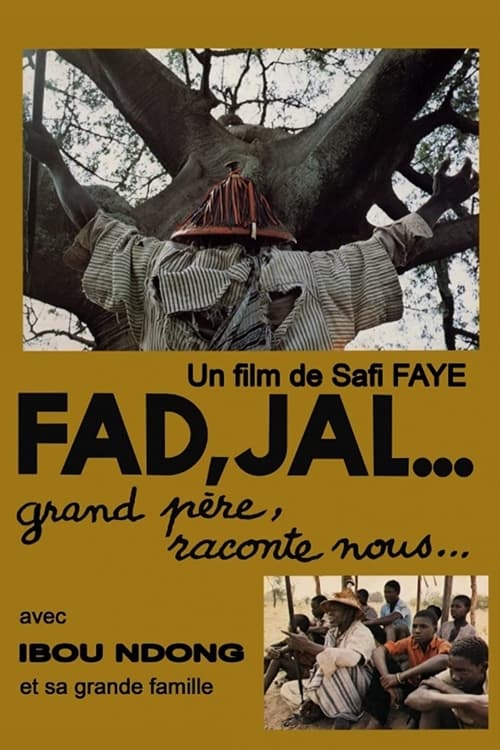
Come and Work

The story of a Serer village in the groundnut basin of Senegal. Using the words of their ancestors passed on by oral folklore, the villagers trace the history of their village and their difficulties in working their land and living off their produce. Fad'jal is an extraordinary boundary defying film that interweaves ethnographic footage, intimate observation of everyday village life and fictionalised historical scenes. With it, Faye carefully encourages the viewers to reflect both on African history and storytelling, and on the intersection of fiction and documentary.

Come and Work

5.2 1979
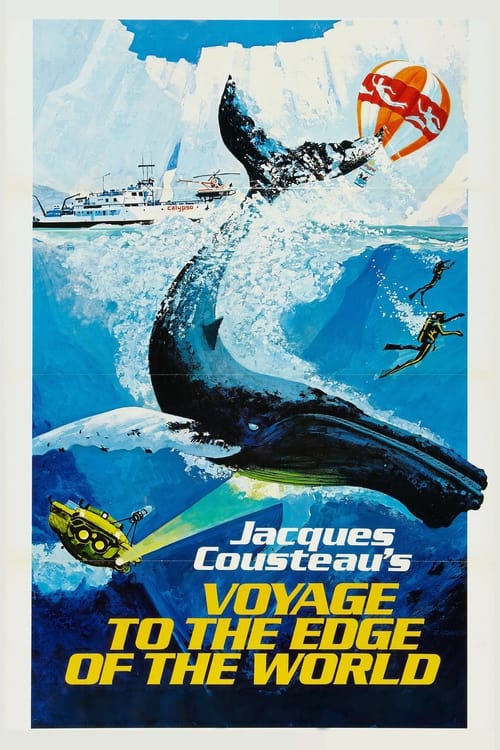
The Cousteau Odyssey: The Nile Part 1

During a 9-month trip, the Cousteau team will explore the longest river on the planet: the Nile. It flows north to the Mediterranean, crosses half a continent and over 7000 years of history. On its shores, civilizations have built marvels of architecture. Kingdoms rose and then fell, each person's destiny still intimately linked to that of the river... without anyone having mastered it. The Calypso team studies life around the Nile, which has remained almost unchanged since the time of the pharaohs.

The Cousteau Odyssey: The Nile Part 1

7.0 1979
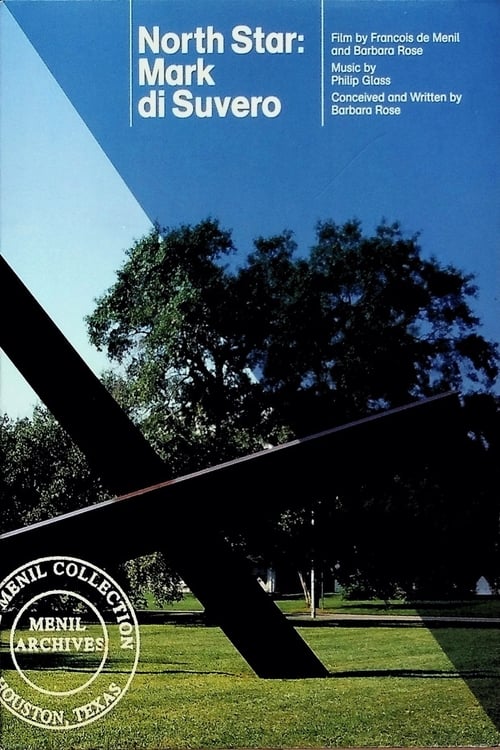
North Star: Mark di Suvero

North Star: Mark di Suvero is a 1977 documentary film about Mark di Suvero that was produced by François de Menil and Barbara Rose. Born in 1933, di Suvero has become one of the most recognized sculptors of the late 20th and early 21st centuries. From about 1975 to 1977, fairly early in di Suvero's long career, filmmaker de Menil and art historian Rose produced this film, which was characterized at the time as "a tribute to the extraordinary work and life of the innovative American sculptor of monumental but delicate constructions." The film shows di Suvero making and installing several of his very large sculptures, and incorporates informal interviews of di Suvero, his mother, and others involved in his career and life at that time. From 1971 to 1975 di Suvero, an American, lived in a self-imposed exile in France in protest of US involvement in war in Vietnam and Southeast Asia, and the filming spans the end of his exile and his return to New York.

North Star: Mark di Suvero

5.0 1978