246 Matches Found

La Rabbia

Documentary footage (from the 1950s) and accompanying commentary to attempt to answer the existential question, Why are our lives characterized by discontent, anguish, and fear? The film is in two completely separate parts, and the directors of these respective sections, left-wing Pier Paolo Pasolini and conservative Giovanni Guareschi, offer the viewer contrasting analyses of and prescriptions for modern society. Part I, by Pasolini, is a denunciation of the offenses of Western culture, particularly those against colonized Africa. It is at the same time a chronicle of the liberation and independence of the former African colonies, portraying these peoples as the new protagonists of the world stage, holding up Marxism as their "salvation", and suggesting that their "innocent ferocity" will be the new religion of the era. Guareschi's part, by contrast, constitutes a defense of Western civilization and a word of hope, couched in traditional Christian terms, for man's future.
La Rabbia

7.0 1963
Love Meetings

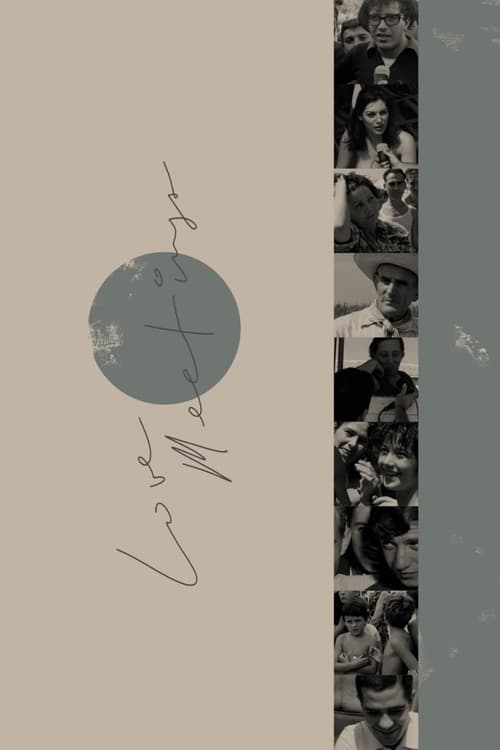
Pier Paolo Pasolini sets out to interview Italians about sex, apparently their least favorite thing to talk about in public: he asks children if they know where babies come from; asks old and young women if they support gender equality; asks both sexes if a woman's virginity still matters, what do they think of homosexuality, if divorce should be legal, or if they support the recent abolition of brothels. He interviews blue-collar workers, intellectuals, college students, rural farmers, the bourgeoisie, and every other kind of people, painting a vivid portrait of a rapidly-industrializing Italy, hanging between modernity and tradition — toward both of which Pasolini shows equal distrust.

Love Meetings

8.3 1965
Italia '61

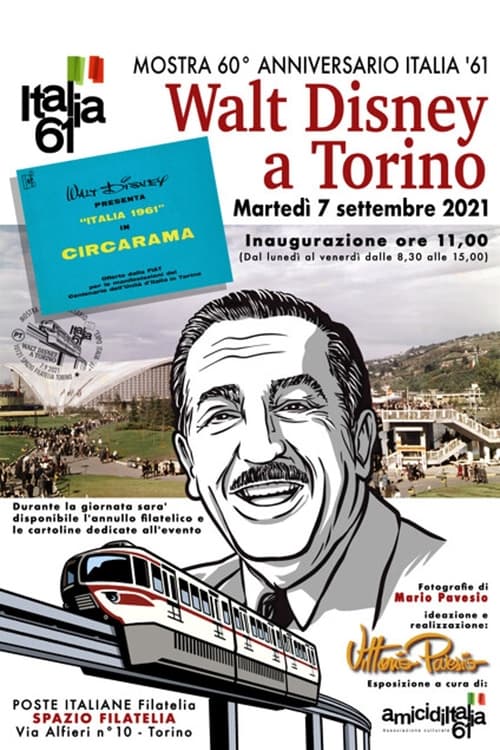
In 1961 Turin celebrated the centenary of the Italian unity with a large exposition which lasted from May till October of that year. One of the most popular exhibits was the 28 minute documentary ITALIA ´61 IN CIRCARAMA which was produced by the Walt Disney company and sponsored by the Italian automobile manufacturer Fiat. The spectacular views of this Cinerama tour of Italy (filmed with nine cameras) impressed more than two million visitors during the entire duration of that Turin Expo.

Italia '61

0.0 1961
The New Angels

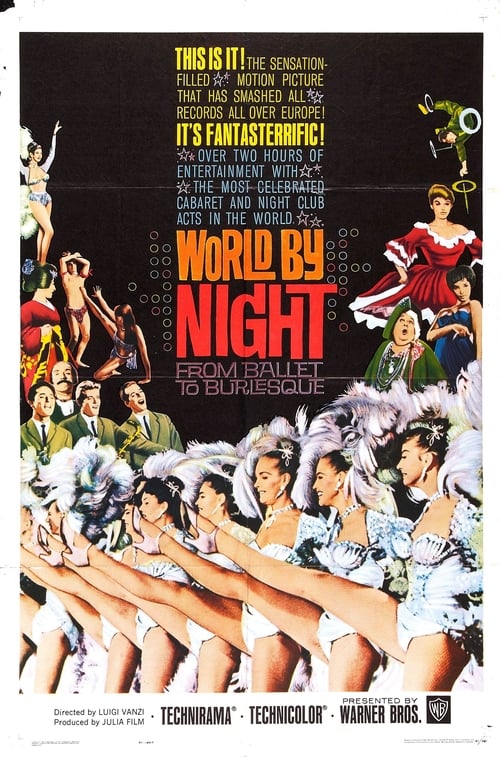
Falling somewhere in-between a documentary and a droll drama (more like an enactment of reality, with a wink), this film by TV director Ugo Gregoretti looks in on a variety of social and ethnic situations throughout Italy. Sexual morés are contrasted, from the quaintly out-of-date courtship in Sicily to the sometimes uncomfortably explicit sexual references in the conversations of the youth at the opposite end of the country. Aside from these manners and morals, there is an examination of what happens when mechanized tools of production begin to take away from the human element at factories and in other industrial venues.

The New Angels

0.0 1962
Wages of Sin

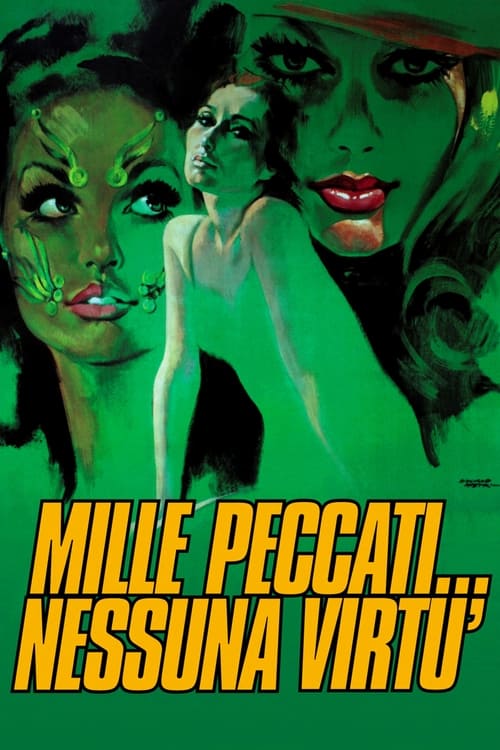
Documentary that analyzes sexuality during it's so-called "revolution", the late sixties. The film shows some sexual "oddities" brought on by the fall of sexual taboos: a German woman who founded an billion dollar industry by selling erotic material; young and beautiful girls who are rented by large complexes to entertain and "persuade" customers; women young and old going to school to learn the art of awakening the interest of their husbands; couples in unscrupulous act as models to abstract painters; single women looking for a mate for the weekend, taking advantage of the "pink train" set up by the German Federal Railways.

Wages of Sin

5.0 1969
Scouting in Palestine

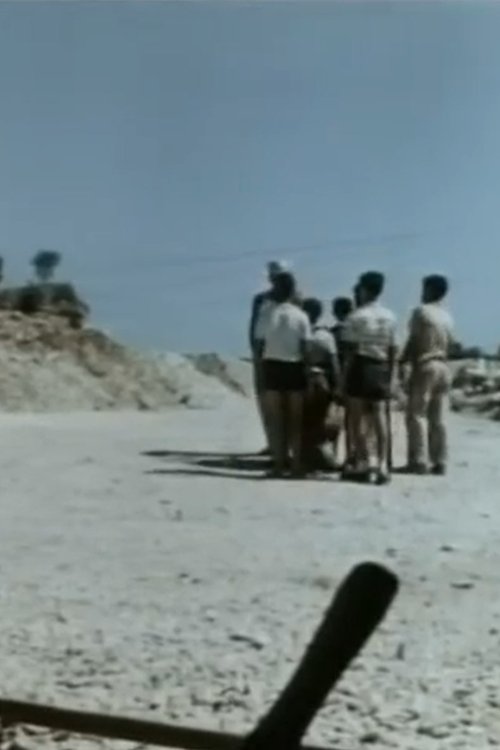
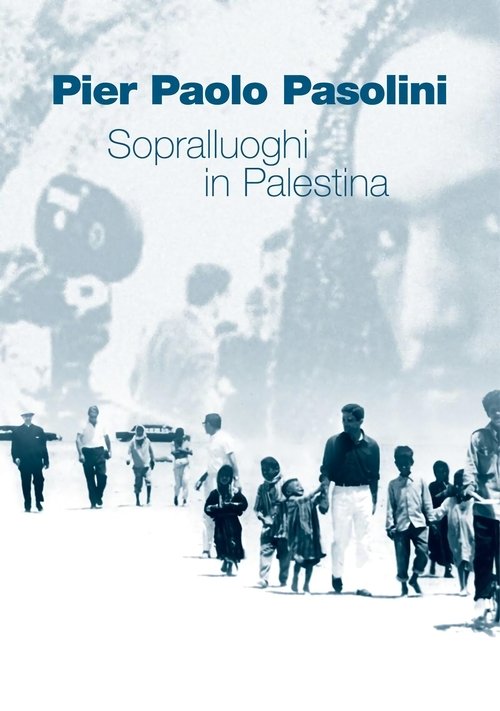
In 1963, accompanied by a newsreel photographer and a Catholic priest, Piero Paolo Pasolini traveled to Palestine to investigate the possibility of filming his biblical epic The Gospel According to Matthew in its approximate historical locations. Edited by The Gospel‘s producer for potential funders and distributors, Seeking Locations in Palestine features semi-improvised commentary from Pasolini as its only soundtrack. As we travel from village to village, we listen to Pasolini’s idiosyncratic musings on the teachings of Christ and witness his increasing disappointment with the people and landscapes he sees before him. Israel, he laments, is much too modern. The Palestinians, much too wretched; it would be impossible to believe the teachings of Jesus had reached these faces. The Gospel According to Matthew was ultimately filmed in Southern Italy. Mel Gibson would use some of the same locations forty years later for The Passion of the Christ.

Scouting in Palestine

7.1 1965
Terra Senzo Tempo

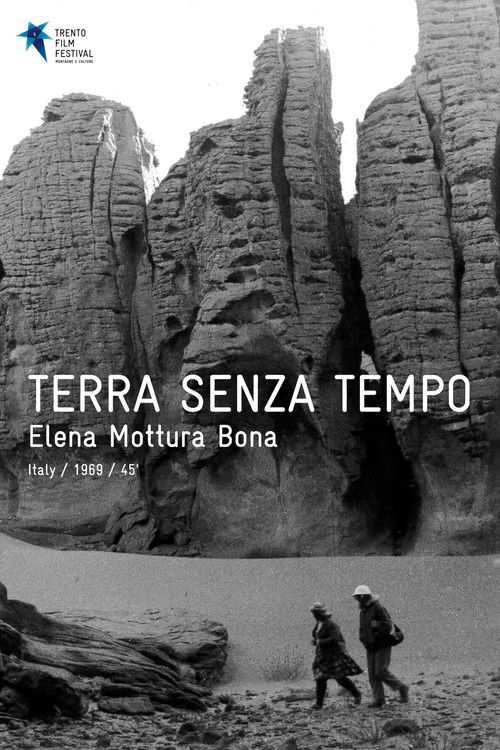
This is the journal of an expedition that, starting from the oasis town of Djanet, embarked on a 12-day journey guided by a member of the Algerian Tourism Club to discover the rock paintings of Tassili n'Ajjer in southeastern Algeria. These paintings date back to prehistoric times (10,000 to 5,000 years ago) and are located on an uninhabited rocky plateau whose highest point reaches 2,158 meters. Considered one of the largest and oldest "open-air rock art museums" in the world, the Tassili n'Ajjer boasts a particularly rugged landscape: the vast rocky plains, which sometimes give way to "forests" of monoliths, are riddled with akbas (holes in the escarpments accessible only on foot or by camel) and numerous faults and canyons. The Tassili n’Ajjer National Park was inscribed on the UNESCO World Heritage List in 1982 and classified as a biosphere reserve in 1986.

Terra Senzo Tempo

10.0 1969
The Last Fistful of Land

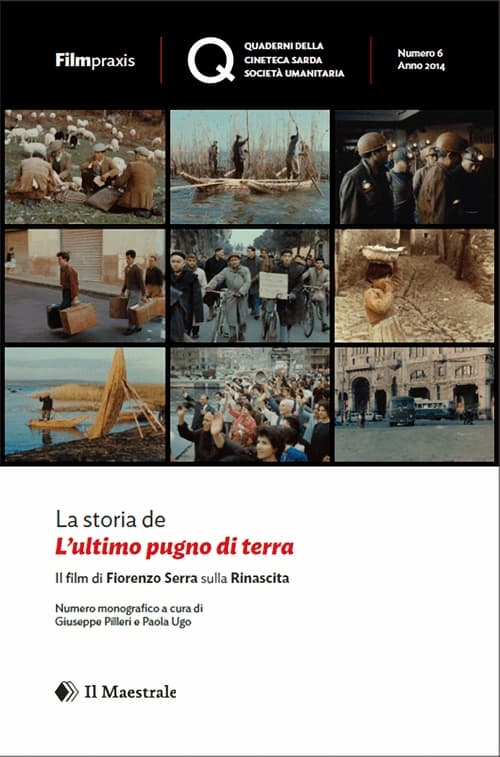
'L'ultimo pugno di terra' (The Last Fistful of Land) is a 1966 documentary film directed by Fiorenzo Serra about the anguish and instability of the lower classes in a destitute Sardinia. Originally commissioned by the Sardinian regional government as a celebratory piece on the 'miraculous' effects of the 'Piano di Rinascita della Sardegna' (Sardinia's Rebirth Plan), the film instead shows an island still 'standing still in time', barely affected by the painful oxymoron of the inevitable changes taking place.
The Last Fistful of Land

9.0 1966
Russia sotto inchiesta

Two Italians, Sandro and Lorenzo, are traveling through the Soviet Union. Lorenzo has been to Russia before and now, accompanying his friend, gives him the necessary explanations. This peculiar technique allows us to see the USSR through the eyes of a progressively thinking Italian, to familiarize through Western countries with the grandiose transformations that were taking place at that time in the Soviet country, with the most essential features of the socialist reality, with the life of people, with the achievements of science, technology, culture and art.
Russia sotto inchiesta

0.0 1963