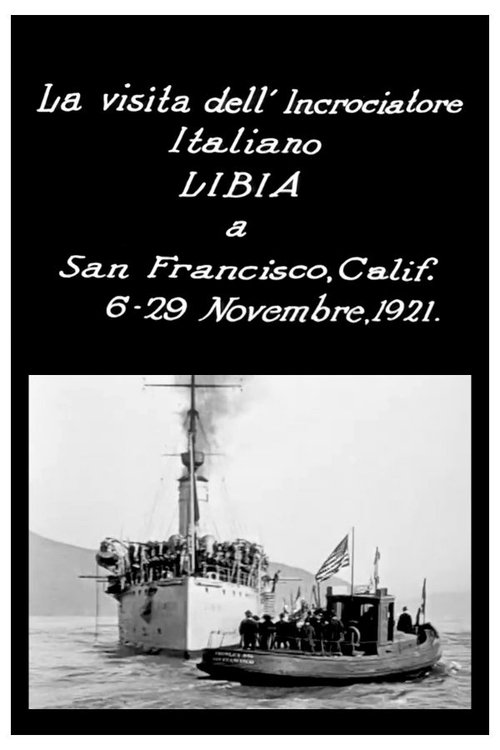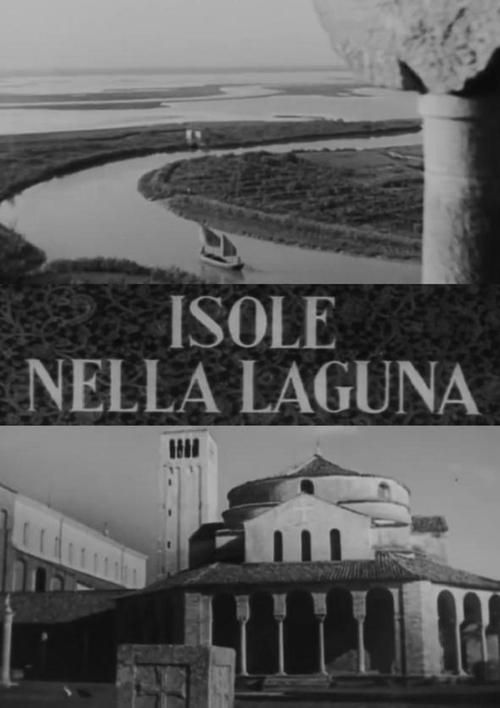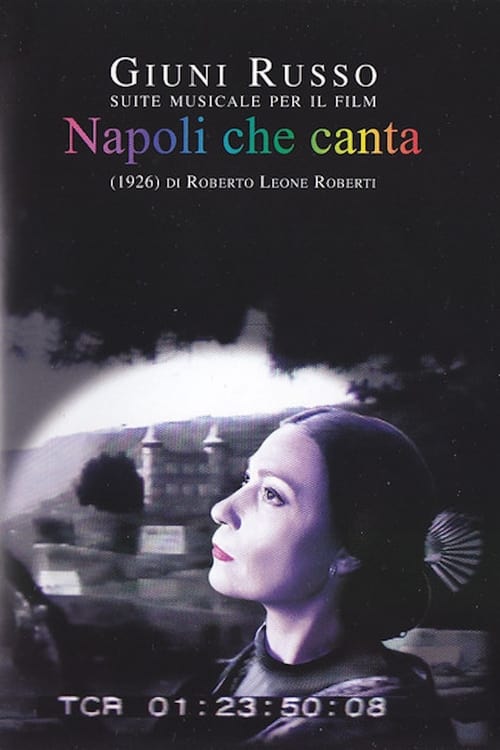
192 Matches Found

1848

The real masterpiece, among these early works by Risi, is certainly 1848 . Made to order for the centenary of the Milan uprising against Austrian rule, the film opens with a group of soldiers apathetically attending the dress rehearsal for a ballet at La Scala. Who knows if Visconti remembered it for the opening of Senso at the Fenice in Venice - when he certainly had in mind a little film directed by Corrado D'Errico in 1941, La Compagnia della teppa , in which a group insurgents use a Rossini premiere at La Scala to launch leaflets against the Napoleonic occupation.

1848

5.5 1948
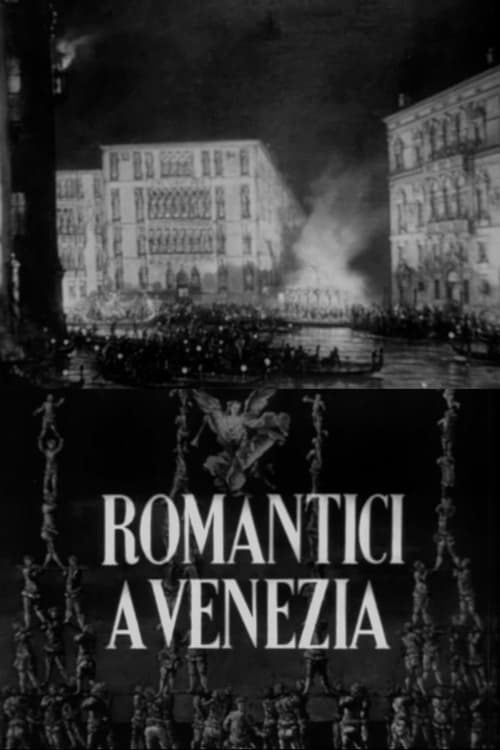
Romantici a Venezia

This is a documentary film on the romantic and decadent atmosphere of Venice at the end of the 18th century. A vigorous comment by Jean Cocteau tells us of the sick souls and the sorrows of literary characters and musicians who lived the dream of this city. It is the Venice of Lord Byron, Alfred de Musset, George Sand, d'Annunzio; a Venice made of precious images, palaces reflected in the water, mysterious moonlights, little squares where unhappy lovers wander under the music of Richard Wagner.

Romantici a Venezia

6.0 1948
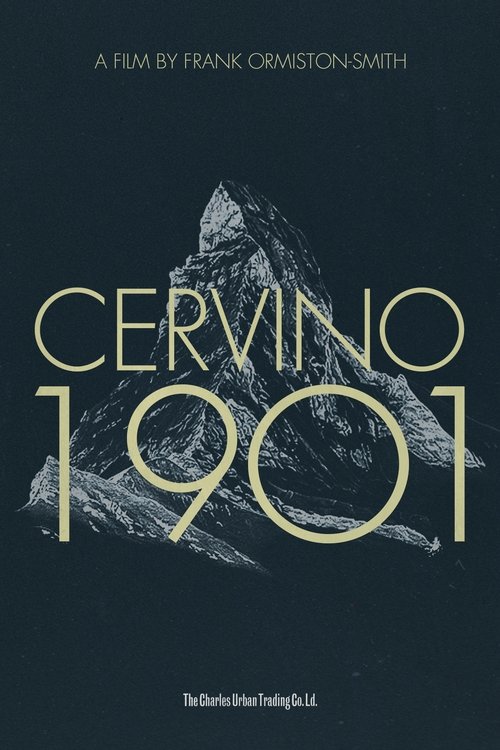
Cervino 1901

On september 28th, 1903, the Urban Mountaineering Expedition, headed by Frank Ormiston-Smith, left Zermatt to attempt the conquest of the Matterhorn. On the 29th, the conquest was completed by the filming of the panorama from the actual summit of the mountain. The film consists of 20 scenes and illustrates the whole ascent from Zermatt through the Hornli Ridge. A copy of the film was found in Zermatt in 1953 and was was erroneously attributed to Frederick Burlingham and dated 1901. Since then, the film has been widely publicized as the first mountain film under the title of 'Cervino 1901', but this is incorrect.

Cervino 1901

10.0 1903
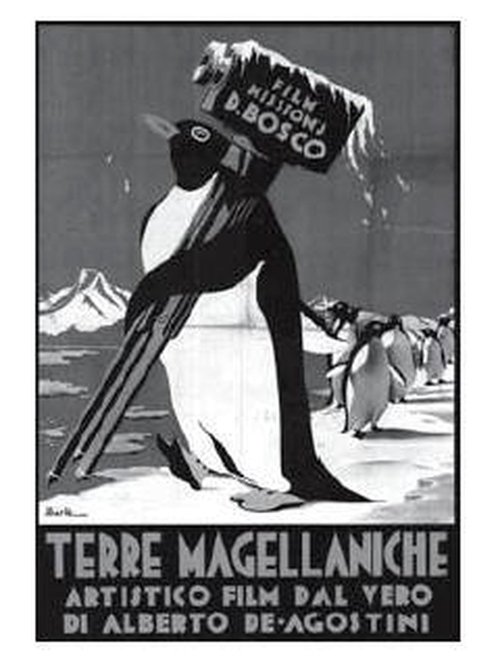
Terre magellaniche

The film Terre Magellaniche represents the fruit of multiple and risky trips that the explorer Alberto M. De Agostini made in the Patagonian mountain range and in the Tierra del Fuego archipelago. Executed with rare mastery and exquisite artistic sense, the film shows the explorer in the labyrinth of Patagonian channels, penetrating the deep fjords between large masses of floating ice of curious shapes, coming from the immense glaciers that descend from the Cordillera and bathe its frontal walls on the waters of the sea. Transported to regions of extraordinary beauty, situated in front of gigantic mountains, from which majestic waterfalls rush, the viewer experiences the illusion of finding themselves in a mysterious kingdom of dream and enchantment.

Terre magellaniche

0.0 1933
St. Matthew Passion

Released a few months after the Italian The Passion According to St. Mathew, this Austrian film is, like the earlier effort, based on a theatre piece. But whereas the Italian picture was inspired by Bach's oratorio, St. Mathew's Passion is a filmed record of a newly commissioned State Burgtheatre production. Actor Raoul Aslan movingly recites the biblical story of the last days of Christ, while the Philharmonic Orchestra of Vienna underscores his words. Director Ernst Marischka breaks up the visual monotony of the proceeding by utilizing a montage of photographs and paintings of the Middle Eastern regions where the original story took place. Reviewers felt that St. Mathew's Passion should have been promoted as a documentary rather than a dramatic feature.

St. Matthew Passion

6.0 1949
1. In the Port of Genoa, Sailing Ship

1°. Nel porto di Genova, Veliero ("1. In the Port of Genoa, Sailing Ship") is a 1928 silent amateur film by Guglielmo Baldassini, preserved as a 2K DCP from a 9.5mm reversal print without intertitles. Held by Fondazione Home Movies in Bologna, the film shows a sailing ship entering Genoa’s port, likely shot from a small boat. Baldassini, a Milanese painter and etcher, used the Pathé Baby format to capture landscapes and seascapes, often as references for his artwork. His archive includes 95 reels filmed between 1926 and the early 1930s, focusing on family, Milan, coastal scenes, and mountains. He developed his films at home, experimenting with tinting, toning, and exposure correction. Many reels show emulsion decay due to aging and chemical treatments. Notes by Michele Manzolini and Mirco Santi appear in the 44th Pordenone Silent Film Festival catalogue.

1. In the Port of Genoa, Sailing Ship

0.0 1928
[Lavagna – The Beach – A Sailing Ship – The Cabanas]

A silent amateur film directed by Nena Lavello. It is preserved as a 2K DCP (1'31" at 16 fps) from a 9.5mm reversal print without intertitles, held by Fondazione Home Movies – Archivio Nazionale del Film di Famiglia in Bologna. According to Michele Manzolini in the 44th Pordenone Silent Film Festival catalogue, the film was likely shot in Lavagna, where the Lavello family spent extended stays at their country house, Villa Rocca. The footage captures leisure activities of Nena Lavello and her group of friends, known locally as the “robustine” for their energetic and athletic lifestyle. Scenes include beach outings, sailing, and games. The Pathé Baby camera used for filming was purchased in April 1925 by her father Arturo Lavello, possibly for travel or as a gift. The film reflects moments of youthful recreation along the Ligurian coast

[Lavagna – The Beach – A Sailing Ship – The Cabanas]

0.0 1925
[AN EASTERN RIVIERA]

Original archive catalogue record indicates "maybe be taken from the 1909 film From Portofino to Nervi" but the festival notes indicate the Pasquali & Co intertitles so date unknown. Fragmentary footage of the Ligurian coast between Nervi and Portofino, beginning with two women on a terrace and moving through sites on the Riviera di Levante. A sequence shows Recco, devastated by WWII bombing, with a clear view of the railway viaduct. In Nervi, we see the port, Anita Garibaldi promenade, and Gropallo Tower, followed by nitrate-damaged scenes including Bogliasco bridge, a painter on the cliffs, and farmers loading hay. The film ends with a sunset over the sea. Produced by Pasquali & Co. this print features English intertitles and was part of the Dawson City nitrate find in 1978. A duplicate negative and this print were made in 1980.

[AN EASTERN RIVIERA]

0.0 1900
[Lavagna – The Beach – Blind Man’s Buff – Le Grazie]

A brief amateur silent film (1'54", DCP from 9.5mm reversal, 16 fps) without intertitles, sourced from Fondazione Home Movies – Archivio Nazionale del Film di Famiglia, Bologna. It forms part of a larger group of 27 amateur 9.5mm films attributed to Nena Lavello, who was 16 years old at the time of filming. Shot during the spring and summer of 1925, the collection documents a range of domestic and travel scenes, including visits to Sicily, Campania, and northern Italy. This particular film captures moments of leisure and companionship on the beach at Lavagna, reflecting the filmmaker’s early engagement with light, composition, and movement. As noted by Michele Manzolin in the 2025 Pordenone Silent Film Festival catalogue, the footage serves as a visual record of youthful play and friendship, offering insight into the personal and expressive potential of early amateur filmmaking.

[Lavagna – The Beach – Blind Man’s Buff – Le Grazie]

0.0 1925
[Cruise from Genoa to Naples]

A silent amateur 9.5mm reversal film presented without intertitles. Preserved by Fondazione Home Movies – Archivio Nazionale del Film di Famiglia, Bologna, the film documents a short cruise aboard the ocean liner Rex, departing Genoa on 17 April 1934 and arriving in Naples the following morning. Organised by Genoa’s Company Recreation Club, the voyage served as a preparatory run before the Rex’s transatlantic crossings. The footage includes scenes of the ship and its passengers, with Ludovico Maria Chierici and his son Enrico alternating use of the 9.5mm camera. As Paolo Simoni notes in the 2025 Pordenone Silent Film Festival catalogue, the Rex—a symbol of Fascist Italy and maritime ambition—was later immortalised in Fellini’s Amarcord, despite never having sailed the Adriatic.

[Cruise from Genoa to Naples]

0.0 1934
Mussolinia di Sardegna

The documentary is about the foundation of a new town in the province of Oristano: Mussolinia. Named Arborea after 1945, it was founded as a result of a dike’s construction in the Tirso basin. The film shows the vastness of the dike in details. Forty thousand hectares of Campidano were made suitable to settlement thanks to hydroelectric plants, and the hard work of plowing and sowing the fields. The images show the efforts of building up a city from nothing to the first farms and houses, the road network and the new church. The last frames are in a street market: the display of goods to be sold and the faces of women doing their shopping.

Mussolinia di Sardegna

0.0 1933
Maratona Bianca

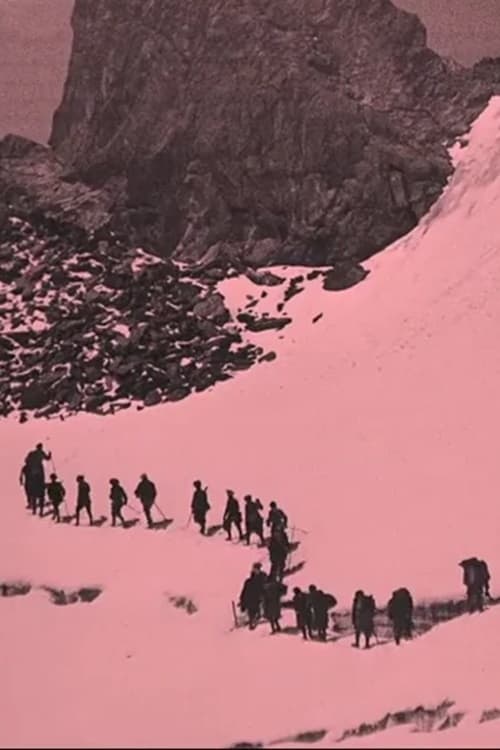
Documentary on one of the first editions of the Trofeo Mezzalama, the highest ski mountaineering race in Europe, at more than 4,200 meters above sea level, which takes place on the glaciers of Monte Rosa, from Breuil to Gressoney-La-Trinité, crossing the summits of Castor (4,199 meters) and Nez du Liskamm (4,100 meters). The film recounts the last hours of feverish preparation before the start, the teams preparing for the race linked in ropes, then follows the stages of the competition by following the groups of skiers from a plane. Created in 1933, the Trofeo Mezzalama was contested until 1938, before falling into oblivion during the war. A second version was organized from 1970 to 1973. A third biannual version has been organized since 1997.

Maratona Bianca

10.0 1935
[Lavagna – Tug-of-War]

A silent amateur film with a runtime of 1 minute and 28 seconds (DCP from 9.5mm reversal, 16 fps), presented without intertitles. Preserved by Fondazione Home Movies – Archivio Nazionale del Film di Famiglia, Bologna, the film documents a game of tug-of-war on the beach at Lavagna during the summer of 1925. A group of young participants, dressed in bathing suits, engage in the activity while a dog observes from the sidelines. The footage is notable for its stable tripod-based composition and the use of horizontal camera movement to follow the action. At age 16, Lavello demonstrates early technical proficiency and an interest in capturing spontaneous social interaction. As noted by Michele Manzolini in the 2025 Pordenone Silent Film Festival catalogue, the film contributes to a broader visual record of leisure and informal play within early amateur cinema.

[Lavagna – Tug-of-War]

0.0 1925
[Lavagna – Rowing. Diving]

A silent amateur film with a runtime of 1 minute and 20 seconds (DCP from 9.5mm reversal, 16 fps), presented without intertitles. Preserved by Fondazione Home Movies – Archivio Nazionale del Film di Famiglia, Bologna, the film captures scenes of rowing and diving during the summer of 1925 in Lavagna. It forms part of a larger collection of 9.5mm films discovered in 2006 in the cellar of Villa Rocca by Lavello’s grandson, Enrico Vassallo, and donated to the archive in 2007. Restored in 2025 using a 2K wet scanning process to mitigate damage from fungal mould, the footage reflects the technical limitations of manual camera operation, including occasional acceleration due to uneven crank rotation. As noted by Michele Manzolini, the film contributes to a broader visual record of informal leisure and early amateur cinematography in interwar Italy.

[Lavagna – Rowing. Diving]

0.0 1925