136 Matches Found

Magino Village: A Tale

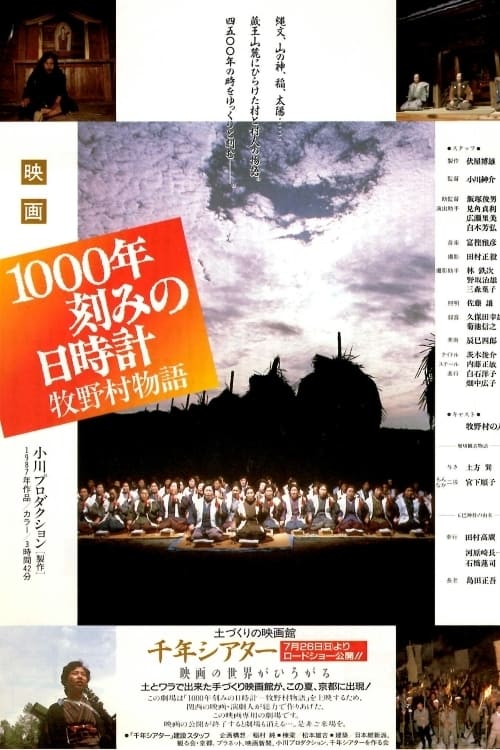
The movie compiles footage taken by Ogawa Production for a period of more than ten years after the collective moved to Magino village. Unique to this film are fictional reenactments of the history of the village in the sections titled "The Tale of Horikiri Goddess" and "The Origins of Itsutsudomoe Shrine". Ogawa combines all the techniques that were developed in his previous films to simultaneously express multiple layers of time—the temporality of rice growing and of human life, personal life histories, the history of the village, the time of the Gods, and new time created through theatrical reenactment—bring them into a unified whole. The faces of the Magino villagers appear in numerous roles transcending time and space—sometimes as individuals, sometimes as people who carry the history of the village in their memories, sometimes as storytellers reciting myths, and even as members of the crowd in the fictional sequences.

Magino Village: A Tale

6.2 1987
King of Swashbuckler: Life of Tsumasaburō Bandō

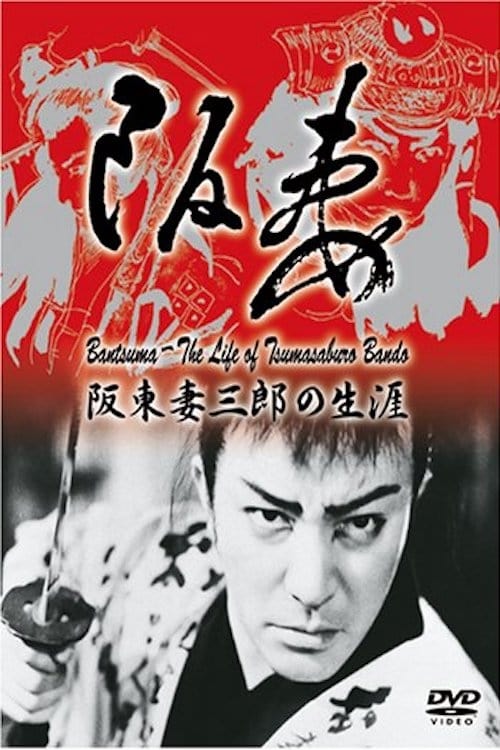
A biographical documentary produced as part of the 20th anniversary project of the silent film appreciation society led by Shunsui Matsuda, who was known as a silent film narrator, film collector and exhibitor. The film features interviews with directors and related parties involved in the production while inserting scenes from period dramas starring Tsumasanburo Bando throughout from Matsuda’s extensive collection. Completed in 1980 but not released to the general public until 1993 on the 40th anniversary of Bando’s death and Matsuda’s seventh anniversary.

King of Swashbuckler: Life of Tsumasaburō Bandō

0.0 1988
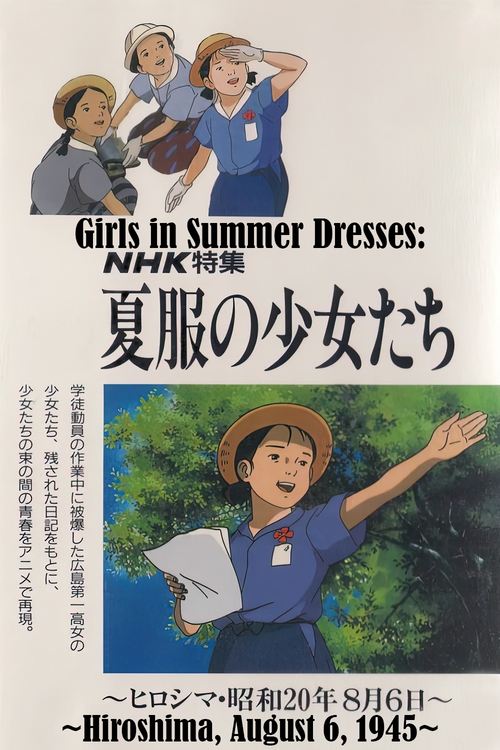
Girls in Summer Dresses: Hiroshima, August 6, 1945

In 1945, the second- and third-year students of a Hiroshima girls' school are taken away to work in war factories. The remaining 220 girls of the first year try to make the best of their new-found status as the only teenagers in an almost deserted town, even amid the deprivations of wartime. On the seventh of August, an American bomber changes their lives forever. Broadcast on the 43rd anniversary of Hiroshima in memory of "the girls who lost their lives to the atom bomb." (Source: Anime Encyclopedia)

Girls in Summer Dresses: Hiroshima, August 6, 1945

3.5 1988
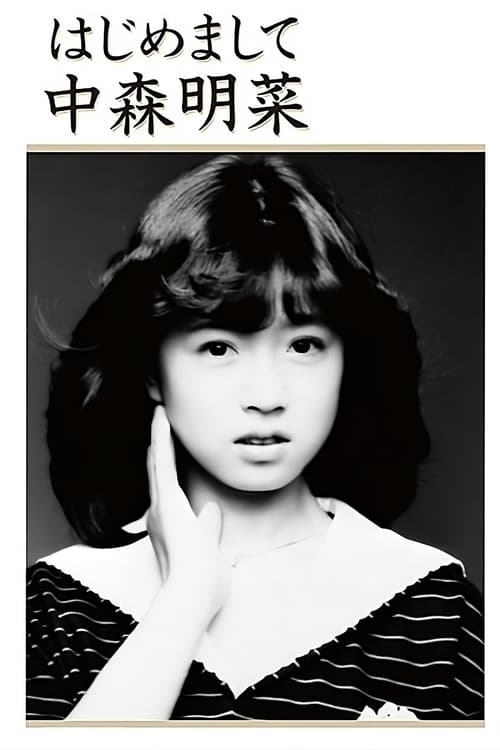
Hajimemashite Nakamori Akina

Akina Nakamori's second video work "Hajimemashite" consists of 12 songs (including three singles "Slow Motion," "Girl A," and "Second Love") from her debut year (1982), filmed at Santa Monica Beach in Los Angeles and other locations where Akina Nakamori visited to record and interview for "Slow Motion" from March 11 to 17, 1982, just before her debut. It also includes the recording of her debut song "Slow Motion," and is full of valuable memorial footage from before her debut!

Hajimemashite Nakamori Akina

10.0 1985
Exclusive Special ! Michael Jackson: 1,440 Hours in the Spotlight

This Japanese documentary follows Michael Jackson during his 1987 visit to Japan as part of the Bad World Tour. The program’s title, “1440 Hours,” refers to the length of his stay in the country. Broadcast on Nippon TV, the special offers unprecedented access to Jackson’s daily life and activities, capturing not only concert footage but also behind-the-scenes moments and his interactions with Japanese culture and fans.

Exclusive Special ! Michael Jackson: 1,440 Hours in the Spotlight

0.0 1987
Prophecy

This rare documentary is one of the very last efforts from preeminent documentarist/activist Susumu Hani best known for his feature films. This one is a short documentary about the 1945 atomic bombing and its devastating consequences. The film came out of the "10 Foot Movement". A movement organized by the Japan Peace Museum, which mobilized Japanese citizen activists to buy back small segments of film footage of the effects of the atomic bomb from the U.S. National Archives. The film combines recent footage of survivors of the atomic bomb with American archival footage, portraying the sorrow of atomic bomb survivors in the Cold War period.

Prophecy

0.0 1982
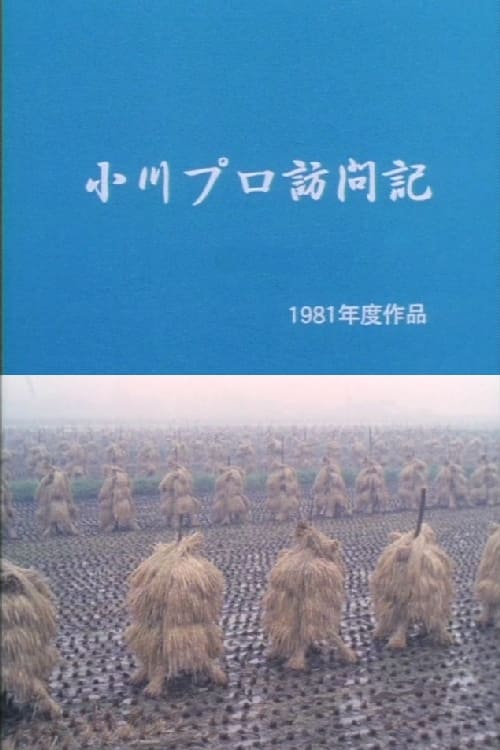
A Visit to Ogawa Productions

A Visit to Ogawa Productions offers a rare insight into the social and cinematic philosophy of one of Japan's best-known documentary film collectives. As the film reveals, Ogawa Productions' in-depth portraits of Japanese society - whether of protest movements or traditional agricultural life - grew out of an unusual commitment to integrate themselves with the communities they filmed, to the extent that their film-making literally became an alternative lifestyle.

A Visit to Ogawa Productions

0.0 1981
The Moments We Lived

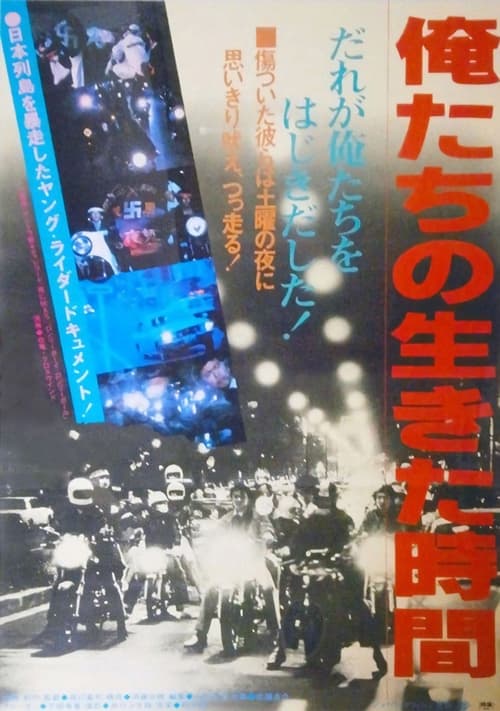
After working as a reporter and an assistant at a radio station, Watanabe Yoshimitsu, former leader of the bosozoku gang Black Emperor, returned to his old stomping grounds and began to make a film about bosozoku. At the time, he was 21. The teenage members of the bosozoku group, also known as " Thunder " would get into their revamped motorbikes and cars and race around the city. With the police as their enemies, they ran from patrol cars and did other defiant acts. They would put on outlandish clothing and, as a result of fights with rival groups, were very loyal to other members of their own gang. Every Saturday, they would cruise around, vanish and reappear throughout the entire night with no particular goal. However on 1 December 1978, because of provisions in the new highway transport law, the end was at hand for their " season of running wild. " The film shows them simply continuing to run wild on this last night before the law is to take effect.

The Moments We Lived

0.0 1982
Akiko: Portrait of a Dancer

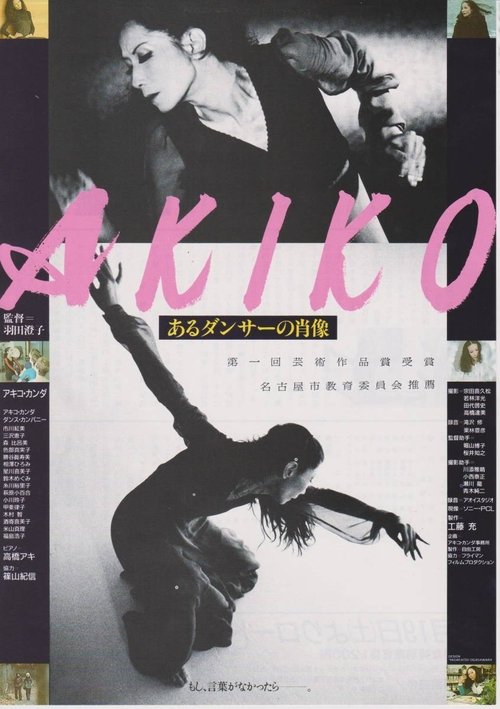
“I have three tasks in my life: to dance, to teach dance, and to create dance,” says the pioneering Japanese performer Akiko Kanda in this intimate portrait of creativity and individuality, After seeing a Martha Graham performance in college, Kanda left her family behind in Japan and arrived in New York City, where she studied under the legendary Graham and became a principal dancer with the troupe. Following the wiry artist as she moves from practice floor to performance hall, and from the cramped single-room apartment she lives in to a trip home to see her aging mother, director Sumiko Haneda reveals a woman who has rebelled against traditional ideals of marriage and motherhood, and who nearly single-handedly brought modern dance to Japan-and kept it alive. “When I die,” Kanda tells the director, “I will be content if I can just say, ‘I danced.'”

Akiko: Portrait of a Dancer

0.0 1985
Bursting Balsam Flower: My Chikuho, My Korea

Having spent her childhood in Dalian and Harbin in the former state of Manchukuo, Taeko Tomiyama carried within her the conviction: “As an Asian, as a woman, I will begin from the margins of beauty.” Noriaki Tsuchimoto, on the other hand, directed numerous films related to Minamata disease. He confronted the suffering of pollution victims head-on, continuing to convey the harshness of life with unflinching clarity. In an interview, Tsuchimoto once remarked: “Within Tomiyama’s narrative world lies something that could be called her eros, her utopia, her aesthetics of liberation. Why does she persist in creating such dark lithographs on the themes of Chikuho and Korea? And how is it that, while doing so, she can also simultaneously depict a world of such beauty?” This film not only reveals the allure of the lithographs themselves, but also centers on the dialogue between Tsuchimoto and Tomiyama. It is a portrait of two comrades, earnestly pursuing the meaning of artistic expression.
Bursting Balsam Flower: My Chikuho, My Korea

0.0 1984