Early collaboration between Chang Chan-tang and Christopher Doyle documenting the friendship of their inner circle in Taiwan during the early 80s.
逆旅與幻象
0.0 1984
22 Matches Found
Early collaboration between Chang Chan-tang and Christopher Doyle documenting the friendship of their inner circle in Taiwan during the early 80s.

During his period working in Taiwan, Christopher Doyle made this experimental short film documenting the families of friends around him. This film received an Honorable Mention at the 4th Golden Harvest Awards (1981).
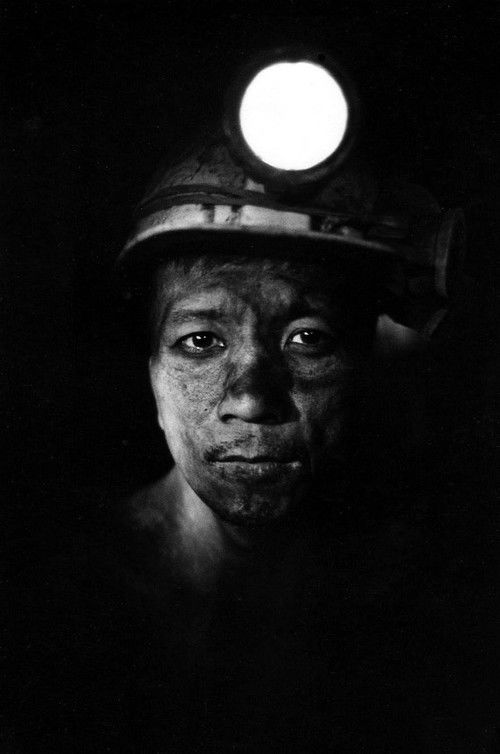
“Journey into the Mine” (礦之旅) is a 1981 documentary directed by Chang Chao-Tang (張照堂). Part of the “Journey Through Images” series (映象之旅), it documents the Ruìsān Coal Mine (瑞三煤礦) in Houtong, Ruifang (瑞芳侯硐). Using a portable ENG camera, the crew descended 600 meters underground to record miners working amid heat, coal dust, and gas hazards. Rejecting elite-centered television perspectives, the film foregrounds the resilience of working-class laborers. Its essayistic voice-over is paired with ECM jazz and blues, creating a distinctive tone. In 1982, it won the Golden Bell Award (金鐘獎) for Best Educational and Cultural Program. A rebroadcast added footage of the Neihu Futian Coal Mine disaster (內湖福田煤礦災變), producing a stark dialogue between policy narrative and industrial tragedy. Its footage was later used in Hou Hsiao-hsien’s 1986 film Dust in the Wind”(戀戀風塵).
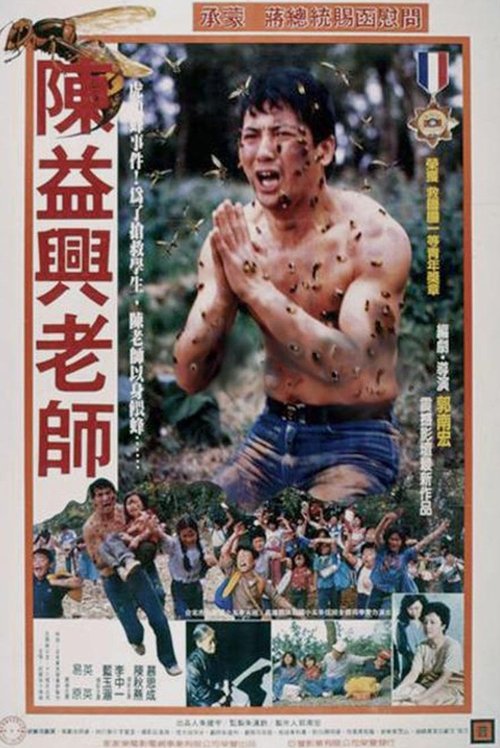
A teacher Chen Yixing, with a group of elementary school students outdoors, was attacked by hornets. In order to save the emergency, Teacher Chen took off his coat, covered the hive, and screamed for everyone to run, and finally martyred.
The Chen Family Residence “Chen Sì-yù” in Xiushui Township, Changhua, was built in 1846 (the 26th year of the Daoguang reign, Qing dynasty). Designed by craftsmen from Tangshan and constructed using stone from Mount Wuyi, the residence features a symmetrical and meticulously crafted layout. The “Wénkuí” plaque above the main entrance serves as a moral exhortation to future generations, bearing witness to the Chen ancestors’ journey across the strait from Fujian to Taiwan.

The townspeople of Meinung inherited their Hakka ancestors' stamina, diligence and optimism. They continue treasured traditional practices, notably the production of oiled-paper umbrellas.
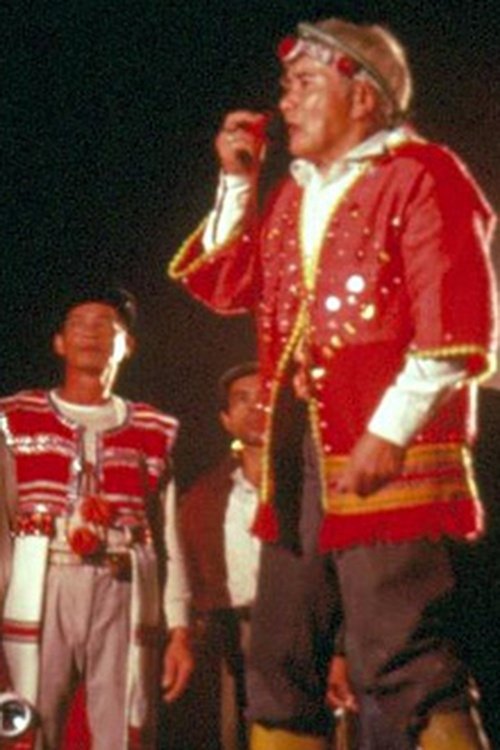
The Pasta’ay, which means "the festival of the legendary little people," is a significant ritual held every other year in the Saisiat aborigine group in Taiwan. Every ten years, they hold the Great Ritual. This film focuses on the Great Ritual in 1986. It tries to convey the Saisiat people’s affection for and belief in the legendary little people. At the same time, the film brings into light Saisiat people’s ambivalence towards tourist invasion, and their dilemma of being caught between tradition and modernization. Structured by the Pasta’ay songs’ movements, the film breaks down to 15 chapters. It carefully juxtaposes the visual with the aural elements, which are conveyed in the conceptual dichotomy between “the real” and “the artificial.”
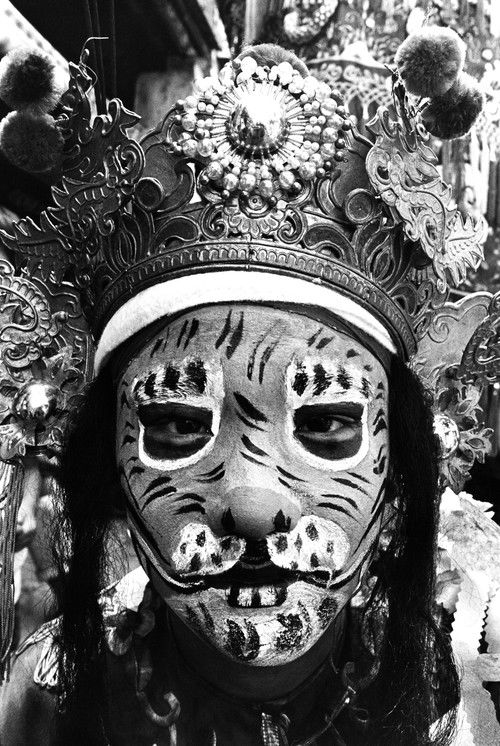
"The Beauty of Ritual" (《祭典之美》) by Chang Chao-tang (張照堂) surveys Taiwanese folk festivals across regions and seasons, framing them through the perspectives of archaeologist Chen Chi-lu (陳奇祿), choreographer Lin Hwai-min (林懷民), psychologist Yu Te-hui (余德慧), and painter Shiy De-jinn (席德進). The script and voiceover by Chiang Hsun (蔣勳) articulate the symbolic and affective dimensions of traditional belief.With music by Ma Shui-long (馬水龍), Chou Wen-chung (周文中), Kitaro (喜多郎), and Mike Oldfield, the film juxtaposes Eastern and Western sonic forms, re-mediating ritual as a dynamic contemporary cultural field.

This documentary captures the Lanling Theatre Troupe's 1985 production of Nine Songs on 8mm film, following the troupe's rehearsals and actual performance and meticulously capturing the vibrant energy of Taiwan's experimental theater movement.
Through an abundance of 8mm stop-motion animation and montage, Hong Kong The Feeling documents the urban landscape of Hong Kong in the golden age of the 80s. With multiple angles, the camera travels through city blocks, the crowds and the traffic at peak hours. From symbolized graffiti to popular culture, all images vividly portray the era of economic prosperity.
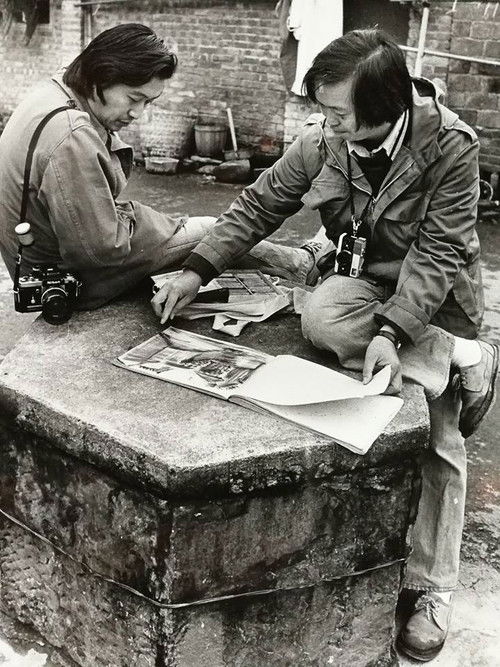
This landmark 1981–82 documentary series consists of weekly 25-minute episodes filmed across Taiwan using an ENG (Electronic News Gathering) camera. It documents local customs and social textures through a distinctly humanistic lens. The project also marks an early collaboration between Christopher Doyle and Chang Chao-Tang.
In his 40s, sculptor JU Ming had already made his name in the early 80s art scene in Taiwan. He then decided to pursue opportunities in New York. During then, HUANG Yu-shan made her first documentary with JU Ming as the subject when she studied at New York University. The film contains footage of JU knocking and carving in his studio and interviews with gallery managers, art critics, and sculptors. This film brings together two New York experiences from two Taiwanese/Asian “exhibitors” who respectively experienced documentary filmmaking and sculpting in the city.
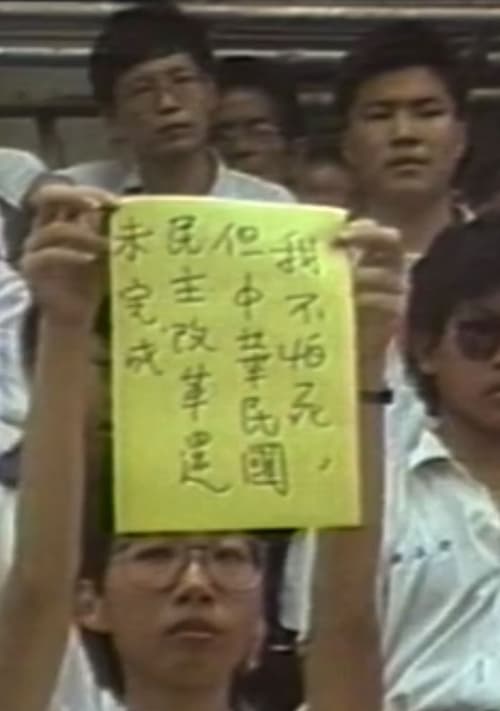
Three commentators sit in a news studio in front of a TV discussing the Tiananmen Square massacre as reported by local and foreign media. This film aims to examine the politics of image and the image of politics through commenting on the topics of democracy, media control, consumption and commercialism.
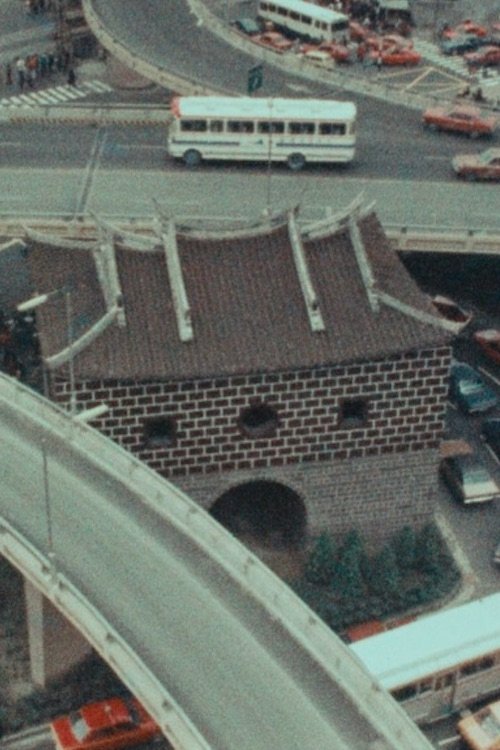
A montage film juxtaposing Taipei's urban landscape with audiovisual archives of the Tiananmen Square protests, constituting an experimental essay with documentary elements.

The Return of Gods and Ancestors is the first locally made ethnographic film in Taiwan. The film, captured with a hand-cranked Bell & Howell 16 mm camera, documents the most magnificent five-year ceremony in Paiwan tribe. During the festival, the Paiwan people expect to receive blessings of the gods and ancestors by piercing rattan balls with extended bamboo poles; however, they also try to prevent any harm caused by evil spirits. The Paiwan five year ceremony is not only the reunion of the dead and the living, but a meeting of the old and the new.

In 1985, US company DuPont received permission from the Ministry of Economic Affairs to set up a titanium dioxide plant near Lukang, Changhua County. The local residents held a series of protests against the plan, even one in front of the presidential office. This rising community consciousness, combined with a growing environmental awareness, ultimately drove DuPont out of the region.

That Photograph is an 8mm experimental film made from an animated still. From the Czech photographer, Josef Koudelka’s photography book, KAO chose a photo of his family beholding a body and made copies of it in a myriad of ways. The photo and the camera are stationary; however, the relationship formed between them through production is in motion.
On 30 November 1986, during the legislative election campaign, leading opposition figure HSU Hsin-liang planned to fly back to Taiwan after years of exile. The Democratic Progressive Party (DPP) called for a mass mobilisation to welcome him at the airport. However, they unexpectedly confronted a large number of police and military personnel on the highway to the airport. The police attempted to disperse the crowd with water cannons and tear gas numerous times. The two sides even attacked each other with rocks. The only three TV stations at the time – TTV, CTV and CTS – repeatedly broadcasted scenes of the crowd throwing rocks and accused the DPP of being a violent party, attempting to affect the election results. The airport incident that Green Team captured soon became a popular video that the DPP candidates played at their campaign headquarters to subvert official lies in a timely manner. This film is a full coverage of the incident, edited after the election.
A Taiwanese student film paying tribute to John Lennon's sudden death won the outstanding 8mm documentary award at the 1982 Golden Harvest Awards.

On the Way Home follows a man on his way home on a rainy night, while cross-cutting the happenings after he returns home: doing laundry in a flooded bathroom, drinking tea, reading, and repeatedly opening and closing the door.
In the 1970s, the wave of modernisation hit the Orchid Island (Lanyu). Warship Rock, Double Lion Rock, Lover’s Cave, the wisely and artistically designed tatala (traditional fishing boat), along with the Tao people’s amazing fishing skills were well-known by the public through the growing tourism, yet the small island of Lanyu and Tao people’s indigenous ways of life still remained a ‘spectacle’. When the documentary film crew arrived with curiosity and good intentions, what stories would they tell together?