4 Matches Found

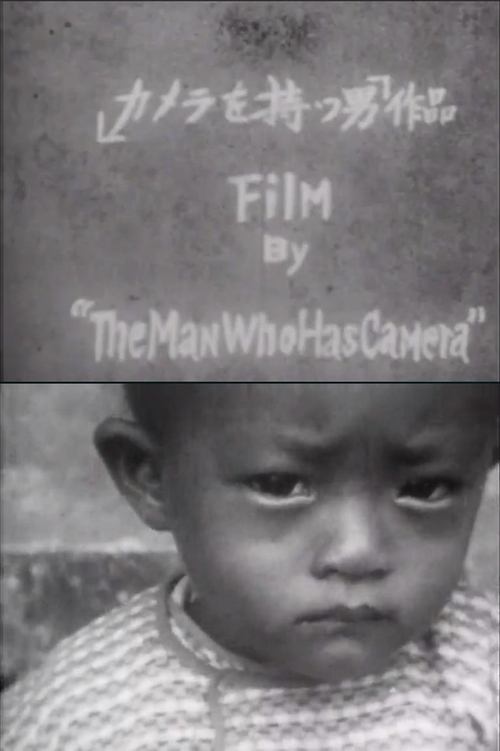
The Man Who Has a Camera

Liu Na’ou’s The Man with a Movie Camera is comprised of five episodes, shot in four cities across national boundaries: Tainan, Canton, Shenyang, and Tokyo. It displays impressionistic street spectacle and images of quotidian life, as well as excursions by train and ship, unfolding as a private visual journal and a sort of souvenir, but with refined framing, camera movement, and rhythmic editing. With his own perspective and artistic sensitivity embedded in this film, struggling between being a Japanese colonial subject and a Taiwanese/Chinese litterateur, Liu attempts to transcend geological, national, racial/ethnic, linguistic and medial boundaries, to establish a depoliticized, internationalist, cosmopolitan cinematic utopia, a pure cinema, and a fluid and contested identity.

The Man Who Has a Camera

0.0 1933
Formosa

Formosa depicts the landscapes, architecture, customs, culture, agriculture, natural scenery, Indigenous peoples, and colonial traces of Taiwan during the period of Japanese rule. It also reflects how the world at that time perceived and imagined Taiwan. This film is the earliest known surviving motion picture shot in and about Taiwan. This introductory documentary was donated as a duplicate print by the Netherlands Filmmuseum (now Eye Filmmuseum) in 1991. According to the museum’s records, the nitrate print dates to approximately 1922. However, based on the research of scholar Lee Daw-ming, the film may have been shot as early as 1917 by Herford T. Cowling. The exact date when the original positive film was produced and its subsequent whereabouts remain unknown. Formosa is preserved and presented by the Taiwan Film & Audiovisual Institute in 2025.

Formosa

5.0 1922
An Introduction to the Actual Condition of Taiwan

"An Introduction to the Actual Condition of Taiwan" is the first film ever made in Taiwan. It was commissioned by the Japanese authorities to director Toyojirō Takamatsu (1872–1952) in 1907, twelve years after Japan occupied Taiwan, as a propaganda movie showing the progress of Taiwan under Japanese rule. The film is lost, but it is known from reviews in local newspapers that it featured a long staged scene of Japanese military repressing a revolt by Taiwanese indigenous people. The aboriginal theme reportedly occupied the longer part of the film. Others were devoted to depicting scenic locations, and the production of "exotic" goods such as bananas and coconuts. The film was criticized for presenting a romantic, exotic, and colonial view of Taiwan, ignoring its more modern industrial products and social problems.

An Introduction to the Actual Condition of Taiwan

0.0 1907