Voyage au Congo Backdrop Blur
Voyage au Congo Poster
7.0 1h 40m

Voyage au Congo

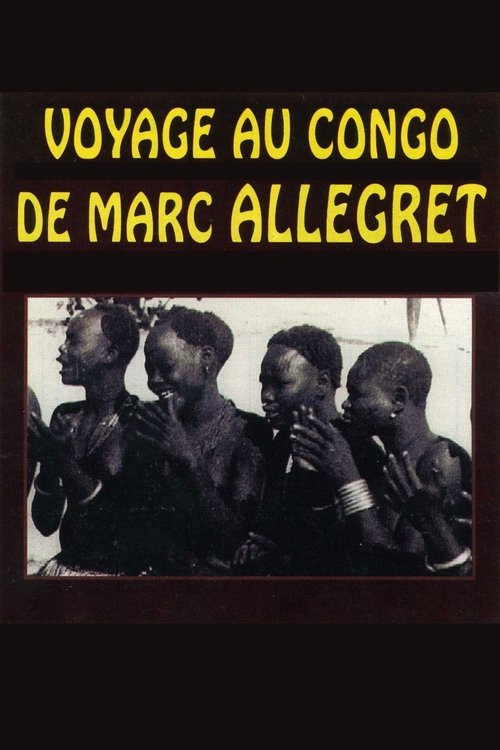
Cinema has long fed our fascination with other cultures, and appears to be just one facet of what is a fundamentally visual fascination. One of the most elaborate manifestations of this was the 1931 Exposition Coloniale Internationale, held in Paris to celebrate ‘la France des 5 continents’. This exhibition sought to represent to the people of France their colonial world by reordering and reconstructing it into scenes or tableaux of everyday indigenous life. This entailed shipping over scores of indigènes and forcing them to act out the gestures of their ‘everyday lives’ under the eyes of 1930’s Parisian society. A slightly less elaborate, although equally controversial at the time, visual representation of The Other was one of the first film documentaries to be made which sought to represent the lives of a colonised people, Marc Allégret’s Voyage au Congo.
Top Cast

Overview

Cinema has long fed our fascination with other cultures, and appears to be just one facet of what is a fundamentally visual fascination. One of the most elaborate manifestations of this was the 1931 Exposition Coloniale Internationale, held in Paris to celebrate ‘la France des 5 continents’. This exhibition sought to represent to the people of France their colonial world by reordering and reconstructing it into scenes or tableaux of everyday indigenous life. This entailed shipping over scores of indigènes and forcing them to act out the gestures of their ‘everyday lives’ under the eyes of 1930’s Parisian society. A slightly less elaborate, although equally controversial at the time, visual representation of The Other was one of the first film documentaries to be made which sought to represent the lives of a colonised people, Marc Allégret’s Voyage au Congo.
Related Movies

Night Will Fall

When Allied forces liberated the Nazi concentration camps in 1944-45, their terrible discoveries were recorded by army and newsreel cameramen, revealing for the first time the full horror of what had happened. Making use of British, Soviet and American footage, the Ministry of Information’s Sidney Bernstein (later founder of Granada Television) aimed to create a documentary that would provide lasting, undeniable evidence of the Nazis’ unspeakable crimes. He commissioned a wealth of British talent, including editor Stewart McAllister, writer and future cabinet minister Richard Crossman – and, as treatment advisor, his friend Alfred Hitchcock. Yet, despite initial support from the British and US Governments, the film was shelved, and only now, 70 years on, has it been restored and completed by Imperial War Museums under its original title "German Concentration Camps Factual Survey".

Night Will Fall

7.6 2014