The Angel Backdrop Blur
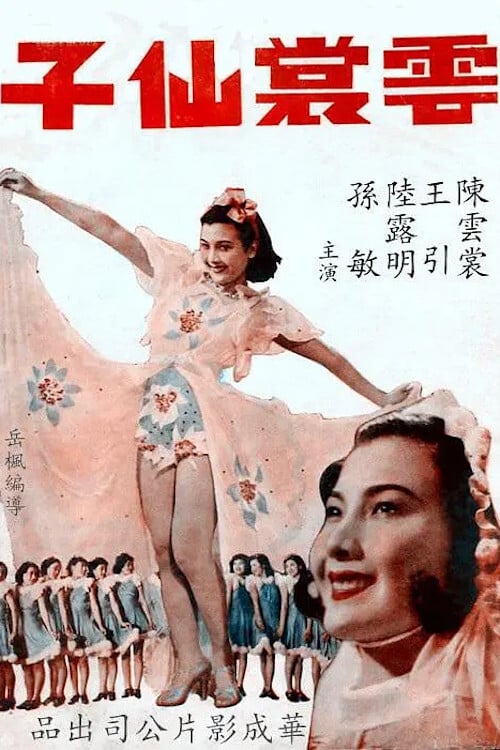
The Angel Poster

The Angel

This is one of the rare gems in early Chinese musical films that still exists today. Nancy Chan plays a naïve young woman who can sing and dance. Under the arrangement of her stepfather, she becomes a star and indulges in the glitz and glamour of the entertainment world before getting married to a wealthy heir in Nanyang. Yet her husband is cruel and unfaithful, leading her to divorce and return to her parents in Shanghai. She is set for a comeback to the stage. Her young daughter suffers from a serious illness. A remake of the Bu Wanchang’s silent film The Light of Maternal Instinct (1933), this film takes cues from Hollywood musicals, resulting in an elegant and lively fusion of camera movement and musical numbers. The film also reflects the harsh reality of China in the 1930s and the pathos of popular literature by combining morals, entertainment and social commentary to show that changes in the idea of femininity is a symbol of progress.

Top Cast

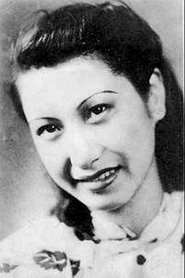
  • Nancy Wan-Seung Chan

    Nancy Wan-Seung Chan

  • Hong Bai

    Hong Bai

  • Lu Luming

    Lu Luming

  • Yin Wang

    Yin Wang

  • Xinyuan Xu

    Xinyuan Xu

  • Min Sun

    Min Sun

  • 傅威廉

    傅威廉

  • Yiu Kwang-Chao

    Yiu Kwang-Chao

  • Xiucen Yin

    Xiucen Yin

Overview

This is one of the rare gems in early Chinese musical films that still exists today. Nancy Chan plays a naïve young woman who can sing and dance. Under the arrangement of her stepfather, she becomes a star and indulges in the glitz and glamour of the entertainment world before getting married to a wealthy heir in Nanyang. Yet her husband is cruel and unfaithful, leading her to divorce and return to her parents in Shanghai. She is set for a comeback to the stage. Her young daughter suffers from a serious illness. A remake of the Bu Wanchang’s silent film The Light of Maternal Instinct (1933), this film takes cues from Hollywood musicals, resulting in an elegant and lively fusion of camera movement and musical numbers. The film also reflects the harsh reality of China in the 1930s and the pathos of popular literature by combining morals, entertainment and social commentary to show that changes in the idea of femininity is a symbol of progress.
Related Movies