Peace Race 1952 Backdrop Blur
Peace Race 1952 Poster

Peace Race 1952

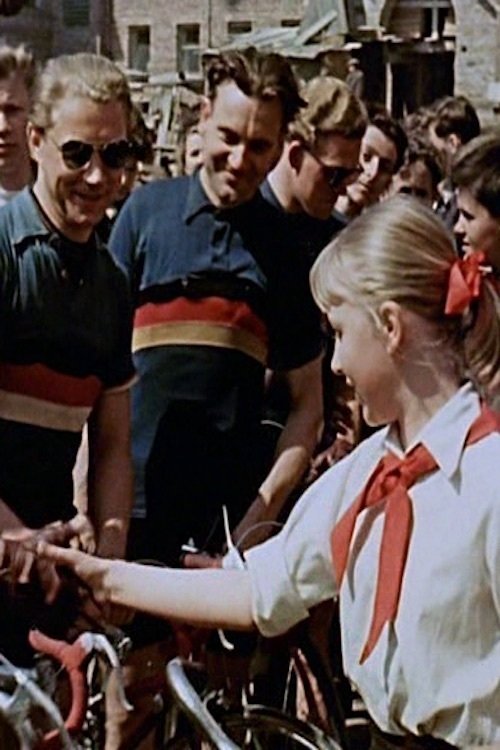
This colour documentary reports about the 5th international peace journey which took place from 30 April to 13 May 1952 and in which 94 drivers from 16 nations took part. Twelve individual stages from Warsaw via Berlin to Prague had to be mastered. The total length was 2135 kilometres, and for the first time the Peace Journey was also held on GDR soil. The individual stages are reported with gripping film shots, short portraits of the cities and regions complete the itinerary. Exciting duels, crashes, winners, but also enthusiastic spectators and cheering workers at the roadsides show the sport from different perspectives. Intermediate cuts and reviews of the expansion and reconstruction of the cities of Warsaw, Berlin and Dresden are also part of this documentary film, as is a critical report on Bloody Sunday in Essen and the police's action against opponents of rearmament in West Germany.

Top Cast

Overview

This colour documentary reports about the 5th international peace journey which took place from 30 April to 13 May 1952 and in which 94 drivers from 16 nations took part. Twelve individual stages from Warsaw via Berlin to Prague had to be mastered. The total length was 2135 kilometres, and for the first time the Peace Journey was also held on GDR soil. The individual stages are reported with gripping film shots, short portraits of the cities and regions complete the itinerary. Exciting duels, crashes, winners, but also enthusiastic spectators and cheering workers at the roadsides show the sport from different perspectives. Intermediate cuts and reviews of the expansion and reconstruction of the cities of Warsaw, Berlin and Dresden are also part of this documentary film, as is a critical report on Bloody Sunday in Essen and the police's action against opponents of rearmament in West Germany.

Related Movies

Night Will Fall

When Allied forces liberated the Nazi concentration camps in 1944-45, their terrible discoveries were recorded by army and newsreel cameramen, revealing for the first time the full horror of what had happened. Making use of British, Soviet and American footage, the Ministry of Information’s Sidney Bernstein (later founder of Granada Television) aimed to create a documentary that would provide lasting, undeniable evidence of the Nazis’ unspeakable crimes. He commissioned a wealth of British talent, including editor Stewart McAllister, writer and future cabinet minister Richard Crossman – and, as treatment advisor, his friend Alfred Hitchcock. Yet, despite initial support from the British and US Governments, the film was shelved, and only now, 70 years on, has it been restored and completed by Imperial War Museums under its original title "German Concentration Camps Factual Survey".

Night Will Fall

7.6 2014